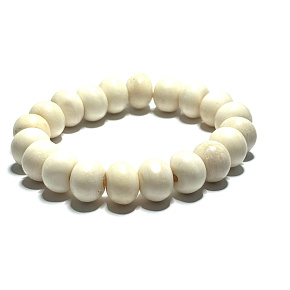
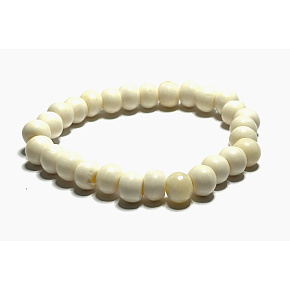
In some cultures, the yak bone is considered a symbol of strength and resilience because the yak survives in harsh conditions. Yak bone carries symbolism associated with the qualities of this exceptional animal and its environment.
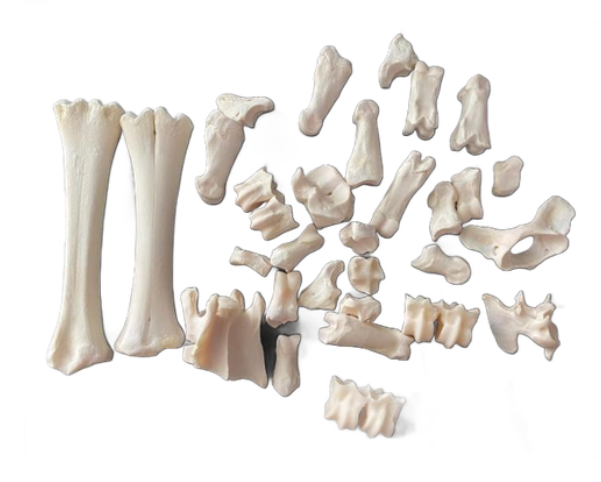
BONE ABILITIES - PROTECTIVE ITEM, AMULET
It protects its wearer from evil influences, demons, the evil eye, illness, or misfortune.
- bone jewelry is a highly personal matter. They absorb your energy and feelings - which is why they are suitable as amulets and various fetishes
- bone is surprisingly quite fragile.Upon impact, for example against a table, it can easily crack
- when in contact with water, nothing happens - only if the bone is dyed, the color may gradually wash out
- all bone jewelry (and not only that) is handmade. Under conditions that are, to us, at the very least strange.
And if you regularly carry such “protectors” with you, you can turn to them whenever you are feeling your worst in life and need a little support. According to the symbolism of the talisman, you will attract more love, health, happiness, wealth, and overall protection into your life.
SPELLS AND MAGIC
Yak bone is the most important material for Tibetan prayer malas and other Tibetan jewelry; it is also the most widespread amulet.
This material therefore carries a strong cultural and spiritual message, often associated with harmony, strength, and the connection between humans and nature.
- Strength and resilience - As it is a symbol of survival in the extreme conditions of high mountains, where it withstands frost and harsh environments. Yak bone thus represents both physical and spiritual strength, resilience, and perseverance.
- Protection and courage - In many cultures, the yak is considered a protector and a source of livelihood. Yak bone can be worn as a talisman that brings courage, protects against negative influences, and provides a sense of safety.
- Connection with nature - Yak bone evokes respect for nature and traditions. In Buddhist and Tibetan communities, it is often used to make prayer beads (malas) and other items associated with meditation and spiritual practice.
- Transformation and spiritual growth - Just as it provides people with sustenance (milk, meat, wool, and even bones), yak bone can be perceived as a symbol of the cycle of life and transformation, reminding us of the value of sacrifice and renewal.
HISTORY AND TRADITION
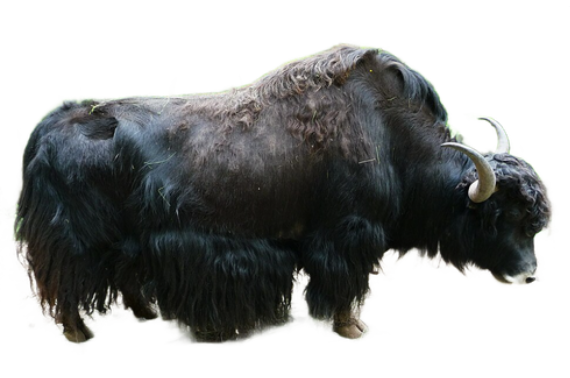
Yak bone is obtained from the domestic yak (Bos grunniens), which is a large, shaggy animal living mainly in the mountainous regions of Central Asia, especially in Tibet, Nepal, Mongolia, and parts of China.
TIBETAN WILD YAKS
- they inhabit mountainous regions at elevations of 3,000 to 6,000 meters, and in summer they can also be found at elevations of 5,000 to 6,000 meters
- The yak is a national treasure.
It provides meat, milk, cheese, but also clothing made from yak hair. For Tibetan nomads, yak wool is also a material for their tents. Almost everything in Tibetan tent homes is connected to yaks, and even yak dung can be used as fuel to keep Tibetan nomads warm and support their cooking. It is also an important means of travel and transporting goods. Yaks even have their own museum in Tibet!
The surrounding world was not very interested in these exotic and little-known animals to him. The black ruminant from the mountains, which Tibetan tribes domesticated as early as 5,000 years ago, is one of the main sources of their food and an important part of their religious rituals. In Buddhist monasteries, offerings are not made of incense as in other parts of Asia, but rather of butter from yak milk.
- on average, there are four of these furry animals for every person in Tibet - 2.77 million inhabitants and 12 million yaks, according to the EFE news agency in its report. The meat is as tender and tasty as traditional beef, but richer in nutrients.
- In northeastern Tibet, in Nagqu Prefecture, whose size corresponds to the area of Spain, but whose population is one hundred times smaller - that is, only about 400 thousand. In this area, where foreigners can only breathe with difficulty due to the altitude of 4,500 meters, one third of the people are engaged in yak herding. And most families living on farms on the pastures live on the food provided primarily by the yak. "How he is everything to us," explains Sangmu, a young Tibetan woman dressed in a classic regional striped apron and constantly chewing gum.
Killing a yak is a problem
Tuan’s plans run up against the Tibetan Buddhist tradition, according to which killing an animal is a shameful act—to such an extent that families weep inconsolably when they sacrifice a yak, even if it is for their own sustenance.
Therefore, it is not at all unusual for Tibetans to eat only the meat of a yak that was not killed by human hands, or to pay a butcher to do the "dirty work," thus sparing the family's conscience.
There are two kinds of yak: the majestic wild species, which can measure up to two meters and weigh a ton and is endangered, and its domesticated version, measuring roughly half as much and weighing half as much. Tibetans call a hybrid of a yak and domestic cattle a dzo.
USES
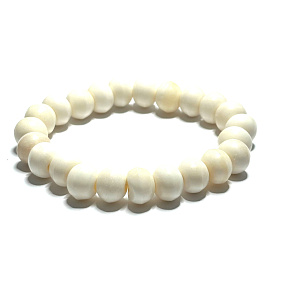
- great for making rosaries, bracelets, and necklaces
- beautiful size, handmade, so the size is not standard
- from Tibetan loose yak bone beads
- hand-polished, not standard round beads,
- Jewelry and amulets: Yak bone is traditionally used to make bracelets, pendants, or beads, often with cultural or spiritual significance.
- Tools and decorations: In mountainous regions, it is often carved into decorative or practical objects.
It is a natural material with a unique structure, often appreciated for its durability and aesthetics.

/search_thin.svg)

/user.svg)
/cart.svg)



/heart.svg) Favorite
Favorite/compare.svg) Compare
Compare