
/search_thin.svg)

/user.svg)
/cart.svg)
E-mail: info@energetickekameny.czTelefon: +420 606 647 298
ALEXANDRITE, transformation – balance – intuition – the stone of the Russian tsars
ALEXANDRITE STONE ABILITIES, LONGEVITY - INTUITION - WILLPOWER - ANALYSIS - SUCCESS IN GAMES OF CHANCE
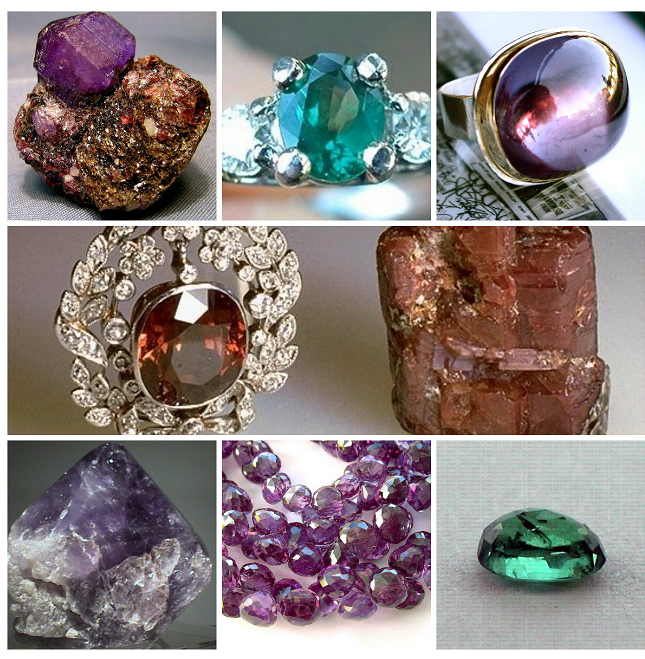
The stone of strong people who can withstand the blows of fate. It is believed that the stone predicts difficulties for them, which it itself helps to overcome. If a person has steadfastly endured adversity, prosperity and success await them. Alexandrite also negatively affects the life of a lazy and weak person - astrologers believe that in this case, the owner of the stone will not be able to cope with problems and difficulties.
- when wished upon, it brings longevity and good health
- it affects a person’s mood - this explains the dual nature of its color; for impulsive people, this trait may be undesirable - emotions will need to be controlled more than usual
- it helps in finding inner harmony
- it brings success in games of chance
- it increases self-confidence
- it develops creative and analytical skills
- it strengthens willpower and character
- it develops intuition
Among lovers of magic, there is an opinion that alexandrite can warn of unexpected events. At such moments, the stone begins to emit a light golden glow. In some cultures, a sudden change in the crystal's color to crimson is considered an ill omen.
HEALTH EFFECTS
- it is able to improve the functioning of the cardiovascular system and have a positive effect on blood composition - the basis of this view is the crystal’s dual color, which gave rise to an association with different shades of two types of blood - arterial and venous, therefore it is recommended to wear it for varicose veins and heart diseases
- it can help get rid of alcoholism, therefore you should have a piece of jewelry with a large natural stone; at night, the stone should be placed in a container with clean water so that the water is “charged” with the crystal’s energy; during breakfast and before bedtime, you should drink the liquid - 1 glass each time
- prevention of skin diseases, pathological conditions of the pancreas, and liver
- wearing the stone for a long time improves performance and mood
ZODIAC SIGNS
Alexandrite is not suitable for choleric people, as it causes them emotional instability; its patron planets are Saturn and Mars.
- Aquarians will feel the positive influence of the stone, it will strengthen their intuition and creativity, and they will become more relaxed and calmer. Wearing the stone will be especially beneficial for communicative representatives of the air sign
- Scorpios are among the signs for which alexandrite is suitable as a talisman.
- It is strongly not recommended for Cancers, Virgos, and Tauruses to wear the stone - it will have a negative effect on their gentle nature, adding insecurity and nervousness. Its influence on the signs of Pisces and Aries is controversial.
- Alexandrite is considered the most suitable stone for Leo because its energy aligns well with the stone's properties. It will not strengthen their self-esteem; on the contrary, it will help them realize self-confidence in life. For example, climb the career ladder, because alexandrite will give them charm and courage.
COLOR AND VARIETIES
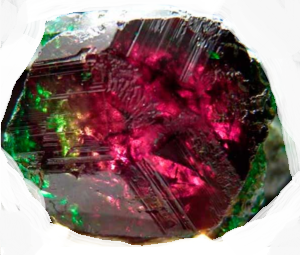
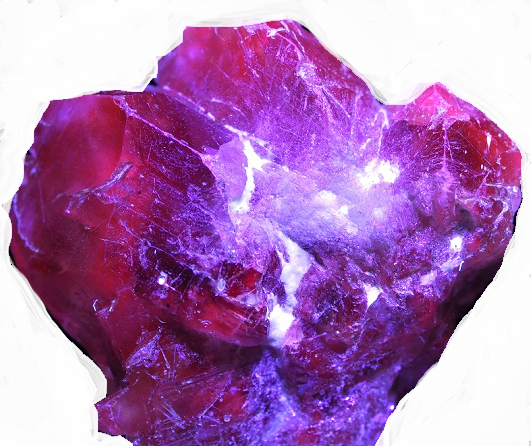
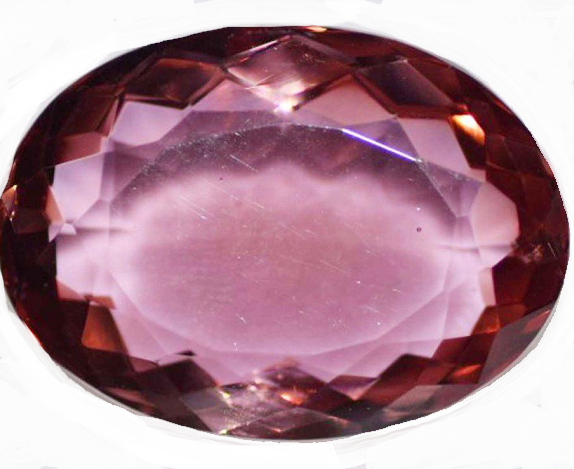
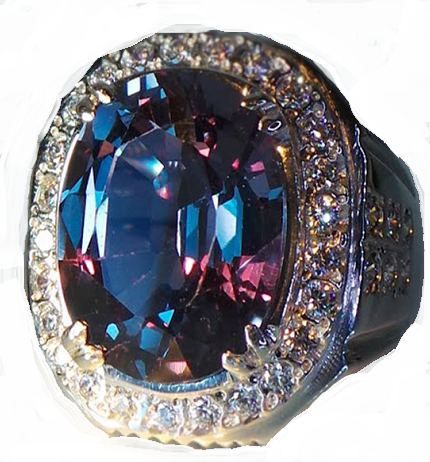
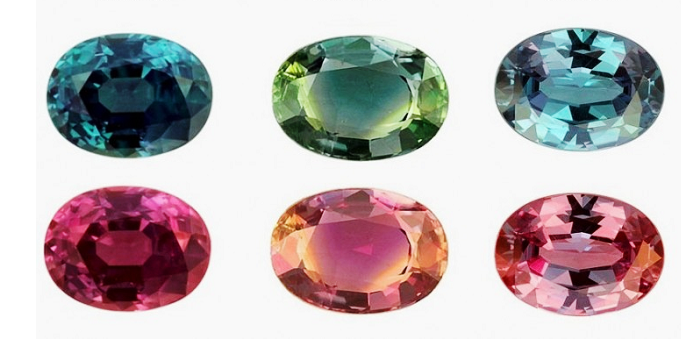
The chemical composition of alexandrite is unique; it belongs to the chrysoberyl group. The ability to change color depending on the lighting of the crystal is caused by chromium ions - scientifically called reverse color. Even untreated alexandrite has a transparent luster; its main shades are considered to be green and blue. Under artificial lighting, the color changes to crimson, crimson, and crimson shades. Such stones are mined in the Urals; they are the most valuable. The mines in these places are unfortunately depleted, because alexandrite is a rare gemstone.
VARIETIES
Alexandrite is transparent, but not colorless. The most valuable specimens are the stones found in the Urals - their colored underside is the deepest. During the day, their surface shimmers in shades of blue, green, and blue, and in the evening—blood crimson and purple.
Crystals mined in Brazil and India have a characteristic brown-green hue that is noticeable in daylight. Under artificial lighting, its red color is deeper and richer than that of the Ural variety. The color gradient in these deposits is weak, and the contrast is low.
In Sri Lanka, alexandrites are brownish-green in color, sometimes with a golden sheen. In the light of a lamp or candle, it changes color to purple; the crimson transition is almost nonexistent. Cat's-eye alexandrite is mined here.
SITE
In other deposits, the crystal has various colors - brown and golden during the day, purple in the evening. Today, alexandrite is mined in several locations:
- India, Brazil, Burma, Sri Lanka, Zimbabwe.
HISTORY AND TRADITION
At 40. years 19. In the century, a large crystal resembling an emerald was discovered in the mines of the Urals. However, it turned out that its hardness was higher, and at dusk the find changed from a deep green color to a crimson red shade. After its discovery, the stone was studied in St. Petersburg, where its properties were recognized as unique. Today, this gem is known as alexandrite, named after the heir to the Russian throne in 1834.
Alexandrite is referred to as the “chameleon” stone, which always attracts attention. Jewelry with them looks luxurious and expensive, the green-red crystal adds nobility to the image. From 19. for centuries, this stone was considered available only to the nobility; it was a characteristic sign of an important person. Since 1840, the Moscow Mineralogical Museum has preserved a unique alexandrite point composed of 22 crystals weighing 5.38 kg.
The value of the alexandrite stone in culture is great; its ability to change color has brought the mineral great popularity in mysticism and magic. Magical
- In Oriental culture, alexandrite is presented with wishes for longevity and good health.
- In India, it is believed that crystal is capable of influencing a person's mood - this is how they explain its dual nature of color.
Alexandrite, almost immediately after its discovery, gained a reputation as a noble stone that was available only to noble persons. Two interesting historical facts are connected with this, making his image even more mysterious.
Why did the stone come to be called "widow's"?
- Given that alexandrite became popular in the mid-19th century. century, when many men died in wars, the remaining widows wore jewelry with this crystal, which gave it a bad reputation for a long time. It was believed that the stone brought sorrow and loss, and therefore it was called the “widow’s stone”.
- The superstition took root that the red color of the stone symbolizes the imminent death of a loved one. Therefore, married women cannot wear it without a pair. 45 is named in honor of the crystal. wedding anniversary - alexandrite.
Why is it considered the stone of the Russian emperors?
- Alexandrite was discovered in the 30th. years 19. century, since then it has been considered a rare and unique crystal. It was found in an emerald mine, so it was initially mistaken for a low-quality emerald. After it was officially recognized as a new jewel, it was presented as a gift to Alexander II on the 16th. holiday. As historians say, the monarch never parted with it and forgot to wear it only on the day he was killed.
- For this reason, the stone is considered a powerful talisman; they try to wear it throughout their life. Also because of this story, alexandrite is called the imperial stone.
COMPATIBILITY WITH OTHER STONES
Wearing jewelry with alexandrite has several nuances, observing which will help you gain from the stone not only aesthetic beauty, but also healing power. This rare crystal is usually set in a ring - a large stone looks the most impressive. The best of all is alexandrite in combination with gold - other metals do not create the cool beauty of the stone so beautifully.
It is impossible to combine alexandrite with costume jewelry and semi-precious stones in a single piece of jewelry, as you would lose all the luxury of the crystal. Jewelers recommend combining with the following stones:
- Sapphire, Diamond, Citrine, Amethyst, Pomegranate, Topaz.
If several rings are worn on the hand at the same time, one of them should be an alexandrite ring. The remaining rings should only emphasize its main role, focusing on its beauty. Suitable sets are thin rings without inserts.
DEFINITION OF AUTHENTICITY
In jewelry stores, you can often find artificial gemstones that cannot be easily distinguished at first glance from original products. There are several rules by which imitation can be recognized:
- The fake has a vitreous luster characteristic of alexandrite, but there is no color change. Does not change shade depending on lighting.
- Several decades ago, an imitation of alexandrite was made from a corundum crystal. A characteristic feature is that it turns green in bright light. Another stone from which they tried to create a copy, spinel, glowed purple when illuminated.
- Andalusite is one of the easily recognizable imitations. It does not shine green and red; it has a rainbow gradient when the angle of illumination changes.
Only an expert can provide an absolute opinion on the authenticity of alexandrite, but most fakes can be recognized by the features mentioned above.
STONE CARE
Alexandrite should be stored in a separate box, lined on the inside with a soft cloth - for example, velvet. Do not leave it on a windowsill or table - direct sunlight and dust will damage it. You can wash it in warm soapy water without using chemicals. When cleaning jewelry with alexandrite, it is absolutely impossible to use chlorinated water and household chemicals. Dry it with a soft, lint-free cloth.
PRICE
The price of alexandrite is influenced by several factors: deposit, clarity, and weight. The most expensive samples are of Ural origin; they are brighter and more beautiful.
Alexandrite is a rare gemstone, its price is only slightly lower than that of a diamond. The question of its value does not even arise, because this crystal is a true symbol of Russian history, and its beauty will allow you to admire the noble luster of the chameleon stone for many years.