
/search_thin.svg)

/user.svg)
/cart.svg)
SITALL STONE PROPERTIES
Science and technology created the stone sital. Only specialized equipment can distinguish it from a ruby, sapphire, emerald, or other natural stone. Anyone can buy earrings, a ring, or cufflinks. The advantages of synthetic crystals in industry or other industrial sectors are not disputed.
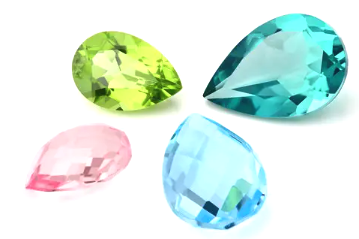
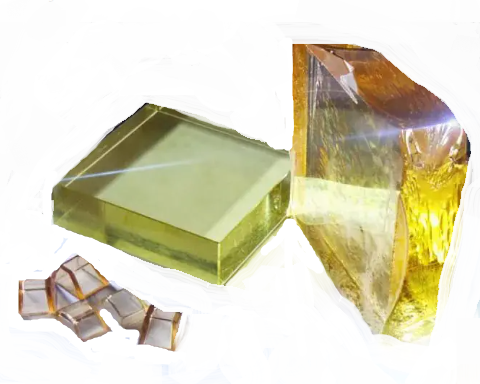
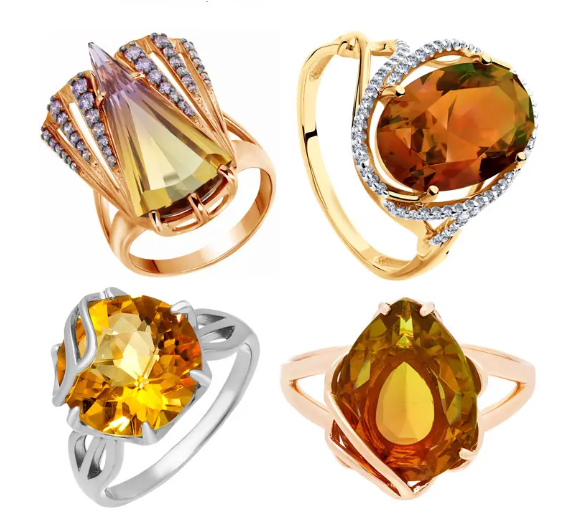
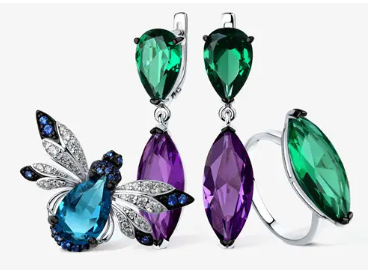
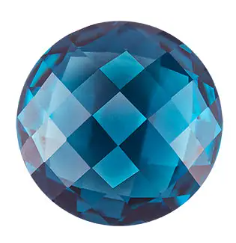
The advantages of laboratory-created crystals are clear:
- Indistinguishable from natural ones at first glance, they look natural, expensive, and chic.
- In terms of physical parameters - purity, resistance to external influences, and others - it surpasses natural.
- Sitall products do not require special care or attention during use. They can last forever.
- They are tens to hundreds of times lower than their natural counterparts.
Typical examples:
- Morganite. This pink beryl is often cloudy in its natural state, colored even in sunlight. Due to the presence of radiation, large objects are not made from it. At the same time, it is prohibitive. Sitall morganite is transparent, insensitive to temperature. Radiation is not talked about. A beautiful, slightly misty peach nanocrystal transforms into a pillow.
- Paraiba tourmaline. Natural stone is very rare, expensive, but almost always far from ideal. Sitall paraiba has a bright, rich turquoise-blue color. Non-trivial color iridescence also appears at dusk. This property gave rise to the crystal’s names – electric or neon.
- Seatall London. Replica of smoky blue-gray topaz. But it does not fade, nor does it blur chaotically in the sun.
- Sultanite. This sitall crystal has more pronounced iridescence than the natural one. It is not afraid of the sun.
Sitalls in jewelry are striking with white or rose gold. They look expensive, which is why jewelry with them is worn with luxurious clothing.
Sitall surpasses cubic zirconia, Swarovski crystals, and other "old" artificial analogues in both physical and aesthetic parameters. They are more durable, they won't fade. Even large crystals retain their shine and color after cutting or other processing.
- Sitall is a product of the twentieth century, sought after in the “practical” spheres of human life. Nanositall is a child of the third millennium. Medicine, high-end industry, and the cosmetics industry will bear the brunt of it.
- The difference between it and a natural gemstone cannot be recognized with the naked eye. Jewelry with it is affordable, chic, and indistinguishable from natural stones.
- It is worn without checking the horoscope. Or they are selected based on astrologers' recommendations as a natural stone.
The strength of nano plates is such that jewelers create a whole range of jewelry—from pendants to massive necklaces:
- The stones are framed in silver or gold, combined with white or colored cubic zirconia.
- The styling of the products allows you to choose jewelry with saddles for all occasions: for the office, for a walk, or for a prestigious banquet.
- For one-day trips, a palette imitating opaque stones is suitable: opal, cacholong, agate, turquoise, others.
- Sitals are highly durable. When arranged in a piece with cubic zirconia, some care will be required. The latter are more vulnerable.
Dozens of types of sitall jewelry have been obtained. The main ones are as follows: Nanosynthetics imitate any natural stones, but they are cleaner and more transparent than natural ones.
MAGIC, OR NOT
Sitally are cultivated by humans, and therefore are deprived of medicinal or magical properties. But there are pluses in it. Intrigues or “whims” on the part of the pebble are excluded. The most powerful wizards or other enemies cannot charge it at the owner's expense. And finally, you can choose and wear jewelry however you like: sitall suits everyone, regardless of their zodiac sign.("+++" - fits perfectly, "+" - can be worn, "-" - absolutely contraindicated).
| Zodiac Sign | Compatibility |
|---|---|
| Aries | + |
| Taurus | + |
| Gemini | + |
| Cancer | + |
| Leo | + |
| Virgo | + |
| Libra | + |
| Scorpio | + |
| Sagittarius | + |
| Capricorn | + |
| Aquarius | + |
| Pisces | + |
HISTORY AND TRADITION
Sitall is a product with an ambiguous history. The right to be considered the stone’s “parent” is disputed by Russia and the United States:
- American Donald Stuckey developed the technology in 1957. The company that produced the crystals named the material pyroceram.
- In the Soviet Union, the development of sitall was carried out by a group of scientists led by Isaac Ilyich Kitaygorodsky. He came up with the idea of using metallurgical waste (blast furnace slag) as a raw material for stone production.
He also introduced the concept of “sitall” into scientific use. According to one version, it is a hybrid of “glass” and “crystal”. On the other hand, this term is derived from the names of the chemical elements that make up the crystal: sicilium (silicon) and aluminum.
USE
Sitalls are not just an affordable analogue of rare jewelry materials. Artificial stone is used in practical, "down-to-earth" areas:
- Mechanical engineering. The properties of molecular sieves are regulated by supplementing the composition with the necessary elements. For example, raw materials modified with perlite or dolomite become a reliable electrical insulator. Copper or silver increase sensitivity to photochemical processes. The surface treatment of Sitall metal parts makes them beautiful and impervious to corrosion.
- Optics. Raw materials with additives are relatively transparent, which is why they are used in the production of mirrors, lenses, light filters, and similar products.
- Oil Gas. Sitall pipes are ordered by companies involved in the extraction, processing, and transportation of raw materials. They have increased thermal and mechanical resistance to wear. The material is strong and reliable, which is important in the harsh climate of Siberia or the Far North, where raw materials are delivered over a thousand kilometers.
- Electronics. In electronics, crystals are used as dielectric insulation for microcircuits.
- Aviation. Glass-ceramics based on them are a material for aerodynamic rocket fairings.
- Building. A popular material for next-generation floors is glass marble. Its consumer properties are beyond praise: it is undemanding and does not wear out for decades.
- Medicine. Crystals have found application in dentistry as a material for fillings and dental prosthetics.
- Household sphere. Sitall cookware and other containers are also suitable for use in a microwave oven.
In the Ostankino Tower, the floor is made of this transparent glass-ceramic material, which is no less strong than metal, and is built into the regular floor as separate elements. Each of these blocks is designed for a load capacity of up to 10 tons.
FEATURES
The transparency of the crystals is almost perfect: their length is measured in hundredths of a millimeter, which is half the wavelength perceived by the human eye. Jewelers will appreciate that.Sitall are glass-like crystals.However, their properties differ fundamentally from those of “glass.”
Stone properties:
- hardness on the Mohs scale - 6.5-7;
- density - 2.4-2.9 g / cm3;
- melts at 1000 °C; some types of crystals are higher.
Other properties of the stone are determined by its chemical composition and structure:
- Heat resistance is ensured by lithium, aluminum, and mineral raw materials (mullite, eucryptite, spinel) in the crystals.
- Unlike natural stones, sitall has zero porosity.
- Its superfine grain makes it an electrical insulator.
- Increased density creates the same thermal conductivity.
- The stone is resistant to chemical attack.
PHYSICAL PROPERTIES
Sitall is a glass-ceramic material. It was synthesized under laboratory conditions; its composition replicates aluminosilicate glass. Its natural counterpart is obsidian volcanic glass. Modern finish - nanosital.It consists of SiO2 and Al2O3 - the basic components of most natural gemstones. The technology makes it possible to create stones of any transparency, color, size, or purpose. According to these criteria, the classification distinguishes jewelry material, ceramics, and slag vitrified materials.
| Density | 2400-2950 kg / cubic meter |
| Flexural strength | 70-350 MPa |
| Temporary resistance | 112-161 MPa |
| Water absorption | 0.01% |
| Dielectric strength | 25-75 MV/m |
| Heat resistance | up to 1000 °C |
| Mohs hardness | 6.5-7 units |
| Special properties | transparent, magnetic, semiconductive, radiotransparent |
MANUFACTURING
The technology for manufacturing bags is almost the same as for glass or glass-ceramics. The basis is the ability of glass to crystallize.
Stone production phases:
- A “source” is prepared — a charge consisting of one or several nucleators (the core-forming clarifying agents). They determine the number of central elements for further crystallization. There are billions of such substances in every mm3.
- The charge is melted. This process is two-phase. First, the centers of the crystal crystallize, then the temperature increases so that they become overgrown with new aggregates.
- The molten material is poured into molds.
- The resulting stone is cooled.
The result is a finely crystalline glass-ceramic. Unlike the production of glass by spontaneous crystallization, glass-ceramics have everything in order and under control.
- The sitall manufacturing technology was used in the pressing of ruby sitall glass for the stars on the Spasskaya Tower of the Moscow Kremlin.
Obtaining stone for the jewelry industry became possible in the new millennium, with the advent of nanotechnology. Originally, it was supposed to imitate sapphires and emeralds. Today, however, glass-ceramic samples of any color are produced with predetermined dimensions.