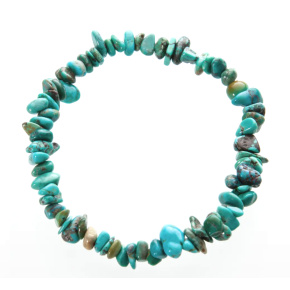
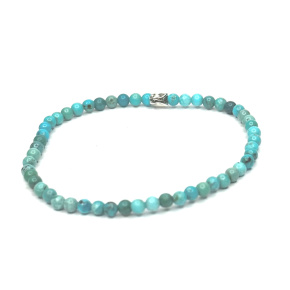
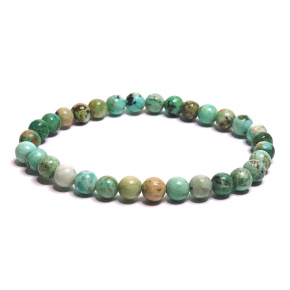
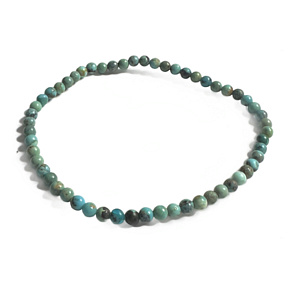
TURQUOISE STONE ABILITIES, MASTER HEALER - HEALTH - PROTECTION - WISDOM - LOYALTY - LOVE
Protective talisman of kings, travelers against misfortune and evil spirits, and for animal lovers. Brings happiness and the favor of fate, a symbol of loyalty and love.
Do you have trouble recognizing or listening to what your body needs in order to feel your best?Does self-care fall to the bottom of your to-do list?Have you been postponing important meetings or tasks related to your well-being?If you need a little help putting your health first, call on your master healer: Turquoise crystal.
Purifying stone, removes impurities, helps with communication, supports the immune system
Native American culture says that it is a bridge between heaven and Earth; turquoise provides a path to your vibrationally highest self.Many Native American cultures believe that turquoise connects the mind with the infinite possibilities of the universe.
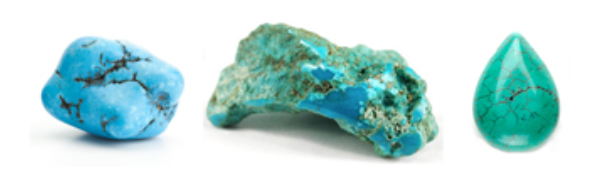
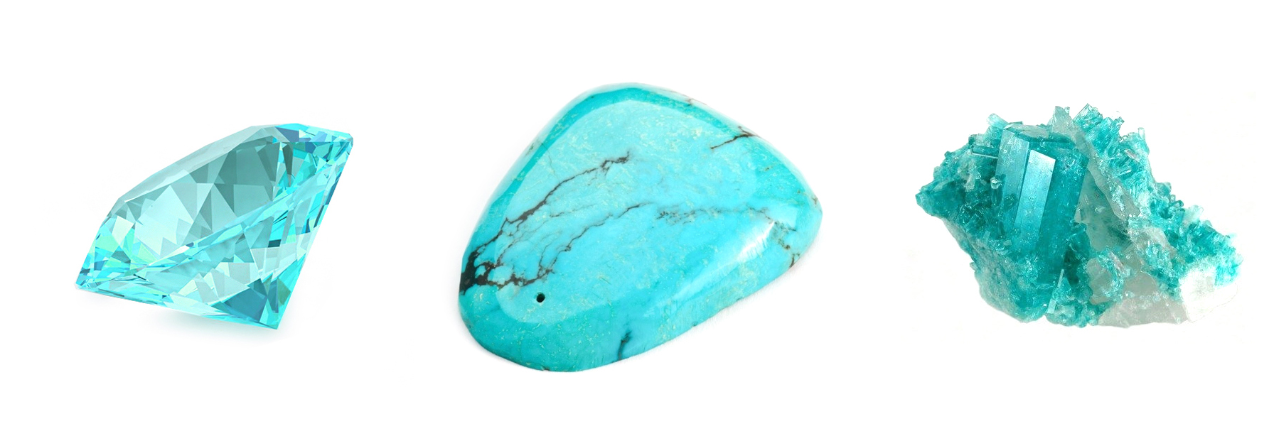
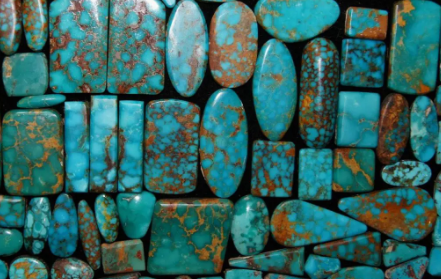
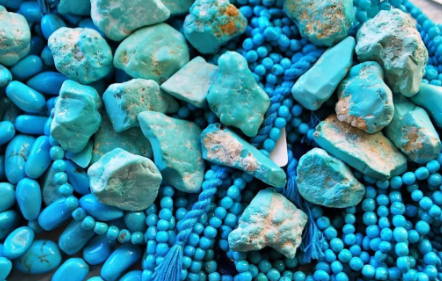
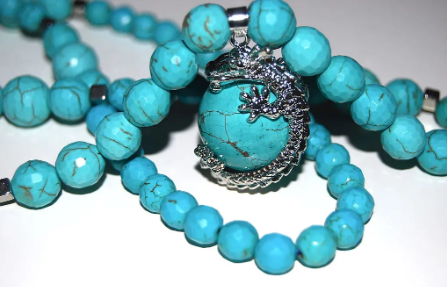
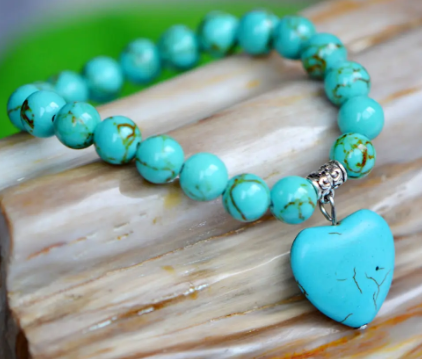
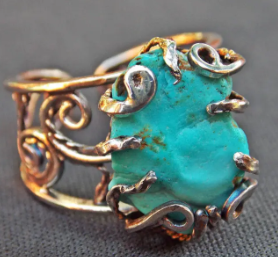
- the gemstone of the gods and longevity
- a stone of compassion that removes impurities and balances the energies in a room
- facilitates the expression of creative abilities - supports intuition and creative thinking, helps to find one’s purpose in life
- helps you understand your partner, encourages romantic love
- strengthens self-expression, releases inhibitions, dissolves negativity, brings courage
- a sensitive and perceptive stone that maintains balance, helps in finding solutions to problems
- stabilizes otherwise changeable moods and induces inner peace
- calms the wearer’s nerves when they have to speak in public
- is excellent for helping with states of exhaustion, depression and sudden waves of panic fear, drives away tendencies toward martyr-like behavior and prevents self-harm
- enables spiritual attunement and improves communication between the material and spiritual worlds
- explores past lives and shows how the creation of your “destiny” continues to unfold further and further, and to what extent you are responsible for what you do at any given moment
- placed on the throat chakra, it releases old vows, prohibitions and limitations
- placed on the third eye, it increases the power of intuition and facilitates meditation
- helps a plant recover from illness or pest infestation
- disperses negative energy and removes electromagnetic smog
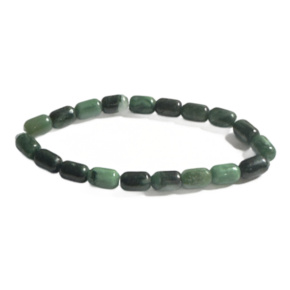
TIBETAN TURQUOISE STONE ABILITIES
It is green and, compared to the bright blue stone, is characterized by slightly different vibrations
- helps in healing a blocked throat chakra and a suppressed ability of self-expression
- can trace the ancestral line until it reveals the source of the problem
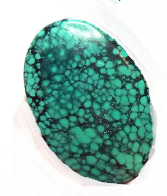
HEALTH EFFECTS
- from a physical perspective, it may protect against migraines and calm the nervous system
- strengthens the whole body, stimulates the immune system, helps the body absorb all nutrients
- regenerates tissues, supports nutrient absorption, helps against pollutants and viral infections
- heals the body as a whole, especially the eyes, including cataracts
- reduces excessive acidity in the body and has a beneficial effect on gout, rheumatism, and the stomach
- has anti-inflammatory and detoxifying effects
- suppresses cramps and pain
Turquoise strengthens the meridians in the body and the subtle energy fields. Improves the functioning of the body's and mind's immune systems.
LOCATION
- can be placed anywhere, but especially on the neck, third eye, or solar plexus
- an excellent elixir is made from it
- take the crystal in your hand and connect with it to maintain strength and stay free from illness
CLEANSING AND CHARGING
- Using uncooked brown rice, which we pour into a bowl and place the turquoise on top, the rice will draw out negative energy from it within 12 hours; then discard the rice
- Turquoise may fade in the sun, so recharge it in the shade or in moonlight
CONNECTION: with the upper part of the lungs and the throat
EFFECT: on the throat chakra
CHAKRA COLOR: blue
DEITIES: Great Spirit, Buddha, Hathor
SACREDNESS: for the Navajo Indians (as the stone of the Great Spirit); Buddhists; the ancient Egyptians (Hathor was the goddess of beauty and was associated with Isis, the queen of love and magic)
WEAR IT WITH: gold, its accompanying metal. Brides of Nepalese Sherpas receive gold jewelry with turquoise at their wedding to bring them good luck in marriage and prosperity.
OCCURRENCE
Today, most natural turquoise is mined in large copper mines as a byproduct of copper extraction.
The most famous stone deposits are located in the area:
- USA, Egypt, Iran, Argentina, Afghanistan, Turkmenistan, Australia, Tajikistan, Armenia, Uzbekistan, Tanzania, Sinai Peninsula.
The sky-blue turquoise mined near the city of Nishapur (Iran) is considered the finest in the world. Since Persian turquoise is mined only by hand, it is much more expensive than gemstones originating from other countries. The production volume of Iranian turquoise (compared to the 70s. the years of the last century) decreased tenfold.
The main characteristics that allow mineralogists to distinguish turquoise are its age and color:
- Young stones painted in white or light blue tones. This variety is porous and looks like bone. It is used only rarely in jewelry, but it is highly sought after among collectors.
- Mature gemstones have a bright blue or turquoise color due to the predominance of copper and the virtual absence of iron in their chemical composition. This is the most expensive and most popular type of turquoise.
- Old nuggets most often painted in green, teal, brown, and gray tones. Their price on the jewelry market is low.
The color change is caused by the process of gradual displacement of copper oxide by ferric oxide. The result is that the mineral first turns green and then turns brown.
COLOR
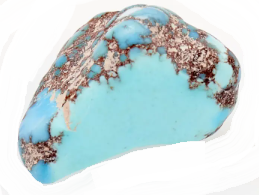
For turquoise, the most sought-after color is turquoise blue and the rarest is green. Pure blue turquoise is a great rarity, as turquoise usually contains brown, dark gray, or black veins. The color depends on the amount of copper, chromium, vanadium, and iron. There are also rare specimens of blue-violet color that contain strontium impurities.
The main characteristics that allow mineralogists to distinguish turquoise are its age and color:
- Young stones painted in white or light blue tones. This variety is porous and looks like bone. It is used only rarely in jewelry, but it is highly sought after among collectors.
- Mature gemstones have a bright blue or turquoise color due to the predominance of copper and the virtual absence of iron in their chemical composition. This is the most expensive and most popular type of turquoise.
- Old nuggets most often painted in green, teal, brown, and gray tones. Their price on the jewelry market is low.
The color change is caused by the process of gradual displacement of copper oxide by ferric oxide. The result is that the mineral first turns green and then turns brown.
In the turquoise color palette - in addition to those mentioned above - the following colors exist:
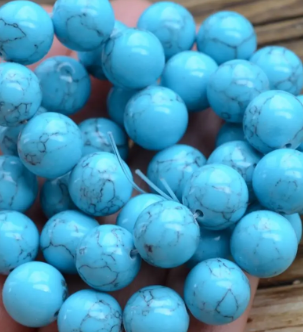
Blue - The most valuable and rarest shade, popular among collectors and mascot enthusiasts.
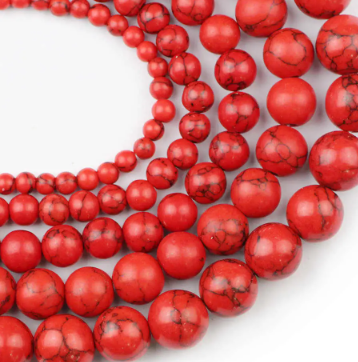
Red - This color—due to the large amount of copper—is found either in very old stones or in artificially colored nuggets. The pink color indicates that this is an imitation, obtained as a result of tinting the inexpensive natural mineral howlite or light turquoise pebbles. It does not occur in nature.
Depending on the place of extraction, turquoise is divided into the following types:
Iranian - Sometimes called Persian - the hardest and most beautiful variety,
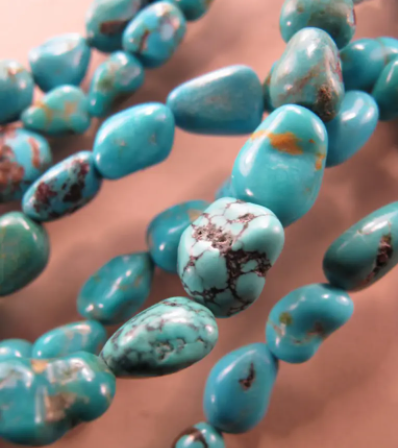
Arizona - It is a very expensive gemstone (over $500 per carat) that has a bright blue color,
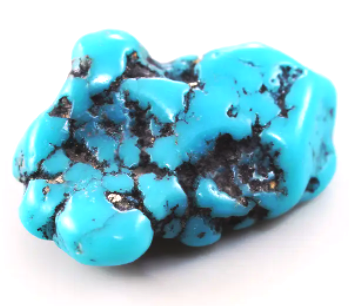
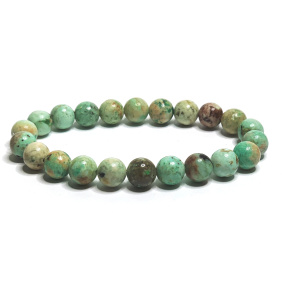
Israeli - A rare variety characterized by green coloration,
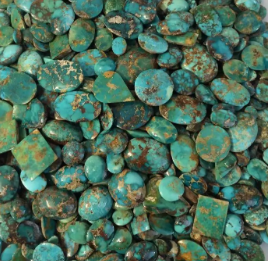
Tibetan - characterized by an amazing variety of colors (including the extremely rare turquoise matrix, dotted with the finest veins of other rocks)
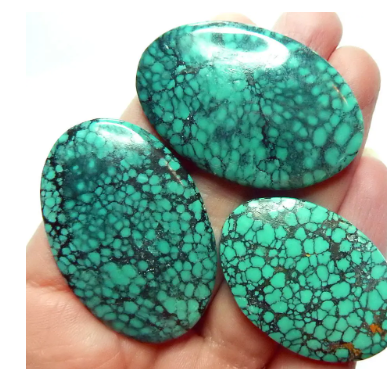
Kazakhstan - As the youngest, this variety, which is valued less than all the others, is characterized by softness and pale colors.So-called “African” turquoise is nothing more than jasper painted a delicate turquoise color. Because it is an imitation gemstone, it has nothing to do with Africa.
HISTORY AND TRADITION
It is a very rare and valuable mineral that has been used as a gemstone and decorative stone for thousands of years. It owes its popularity to its extraordinary color, which is caused by an admixture of copper. Turquoise stones, adored for centuries, were carved and set into everything from royal thrones and daggers to jewelry and goblets.
- The Aztecs inlaid turquoise together with gold, quartz, malachite, jadeite, coral, and shells into probably ceremonial mosaic objects such as masks (some with a human skull as the base), knives, and shields. Natural resin, asphalt, and wax were used to attach turquoise to the base material, which was usually wood, but they also used bone or shell.
- In Persia, turquoise was the national stone for millennia. It was mainly used for decorating objects (e.g.: into the bridles from turbans), mosques, and other important buildings inside and outside. The Persian style and the use of turquoise were later brought to India. Its influence can be seen in gold jewelry (together with rubies and diamonds) and in buildings such as the Taj Mahal. Persian turquoise often bore engravings with pious words in Arabic, which were then inlaid with gold.
- It was also highly valued by the ancient Mongols and Tibetans.
- In Mesopotamia (present-day Iraq), beads dating to around 5000 BC have been found. Turquoise was one of the first gemstones to be mined in Sinai during ancient Egyptian times. The Egyptians believed that the meaning of the turquoise crystal brings good luck and makes them invulnerable.They carved stone into symbolic jewelry and sculptures, such as their breast scarabs.Egyptian use of turquoise dates back deep into the past of the earliest civilizations, if not earlier. Probably the most well-known pieces of turquoise are those that were discovered in Tutankhamun's tomb. It also adorns rings and necklaces, all together with gold. The gemstone was processed into beads, which were used as filler. It was often carved into the motif of a scarab, accompanied by carnelian, lapis lazuli, and colored glass. Turquoise was associated with the goddess Hathor. It was so popular among the ancient Egyptians that it became the first gemstone they imitated with glazed ceramics.When Queen Zar's tomb was discovered in 1900, a turquoise gold bracelet was found on her wrist.
- Before the First World War, turquoise was Iran's main export commodity, where nearly 100 deposits of this stone are located.
The use of turquoise dates back as far as 5500 BC. n. l., when it was believed to prevent accidents and cure diseases of the head and heart. One legend claims that throwing a piece of turquoise into a river will bring rain.
INTERESTING FACTS
1. It is said that with sacred turquoise you can express your true self
The stone of spiritual self-expression. It was sacred to ancient religions and cultures, from the ancient Egyptians to Tibetan Buddhists.
This healing crystal is also associated with truth - turquoise was once given to lovers as a sign that if the stone became lighter, love had also faded.
Wearing turquoise can help you overcome the fear of public speaking. It also encourages you to tell the truth about what you want from others.
The Navajo Indians used turquoise rings as protection against the evil eye, illnesses, and accidents, which may be why turquoise was traditionally considered the stone of pilgrims and horse riders. Riders wore it. as protection, they often placed a small stone under the saddle or on the bridle to protect their animals as well. You can use it while traveling as well.
PLACEMENT: Wear turquoise every day for two weeks until you overcome inhibitions when speaking.
2. Improve your immune system
Turquoise provides excellent support and strengthening; it is said to protect against air pollution and viral infections and helps tissue regeneration. When you work too much, eat unhealthily, and do not get enough sleep, your immune system can suffer, so it is important to keep it healthy and functioning as well as possible. Turquoise was already valued by the oldest cultures; some shamans considered it sacred because it has powerful healing abilities. Folk healers believe that turquoise can "draw" illness out of a patient. It is also a symbol of prosperity, happiness, and devotion.
Treatment
- If you are starting to feel tired, do not wait until you catch a cold or the flu, but pay attention to the needs of your immune system immediately.
- Take the crystal in your hand and connect with its healing energies, then ask it to keep you strong and free from illness.
- Slowly move it in a clockwise circle for several minutes above the chest, perceive its positive radiance, which awakens the immune system and it begins to fight the infection.
- Repeat daily to feel good.
PLACEMENT: above the chest

/search_thin.svg)

/user.svg)
/cart.svg)

/heart.svg) Favorite
Favorite/compare.svg) Compare
Compare