For five thousand years, glass has represented in human history a craft, artistic, and later industrial production and creation of utilitarian objects and artistic artifacts. Its design reflects the technical and aesthetic views of the era. Glassmaking is a manufacturing activity that includes not only the production of glass, but also the processing of glass products – faience, frits, glazes, and enamels.
If we disregard natural glass obsidian, which is formed by the solidification of glowing volcanic lava, fulgurites, created by the melting of rock struck by lightning, and tektites, glass-like bodies found in our region and called Moldavites, then glass is indeed a human invention, but we do not know exactly when or by whom it was invented.
However, its production ranks among humanity’s oldest and most significant discoveries.
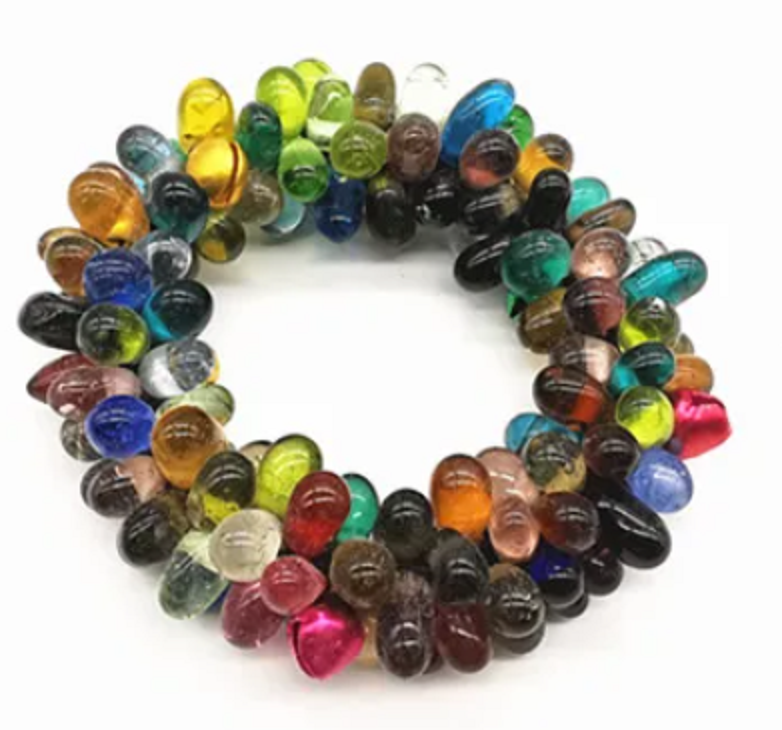
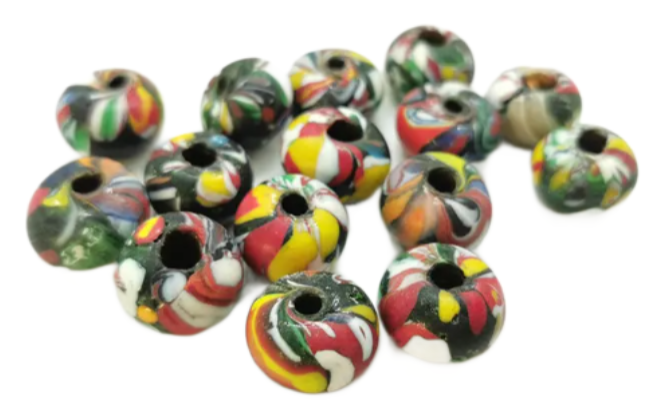
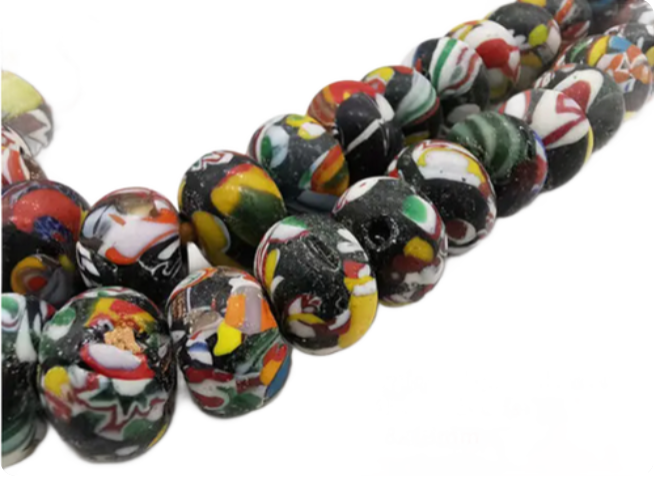
- The oldest known glass object is a greenish bead found in Thebes, approximately 5,000 years old.
- The legend of the invention of glass was recorded by the ancient polymath Pliny in the 1st century AD: In Near Eastern Syria, near the present-day city of Acre, at the mouth of the Phoenician River Belus, merchants transporting soda ash landed with their ship. They wanted to prepare food, and because they could not find suitable stones on the shore to build a fireplace, they used larger lumps of soda under the cauldrons. What was their surprise when they discovered that the great heat of the fire had melted soda with sand into strands of an unknown translucent substance – liquid glass.
The discovery of glass is most likely connected with the smelting of ores and the use of glaze on ceramics, in the regions of ancient Mesopotamia, where already in the second half of the 2nd For millennia, they shaped the first hollow vessels from glass. This is also indicated by the use of molds—forms for shaping glass—which were already known from the casting of metal objects. The processing of precious stones by grinding, cutting, and engraving was also transferred to glassmaking technology, which thus built upon the creation of metal and faience jewelry and jewelry made from gemstones
The oldest glassmaking product was not glass itself, but a glassy material collectively referred to as faience. The first faience objects were already being produced from the 5th century onward. millennium BC n. l. in Mesopotamia, in Egypt, and later elsewhere. They consisted of a core formed from steatite, siliceous material, or powdered quartz, covered with a vitreous layer. The glassy surface was achieved either by applying a glass glaze—ground frit mixed with water and fired—or by immersing the object in a solution of soluble salts or in powdered frit and drying it (the so-called efflorescence) or by coating in glazing powder and subsequent firing (so-called cementation).
Solid glass objects that did not contain a core made of another material began to be produced only from the middle of the 2nd century. millennium BC n. l. in northern Mesopotamia or Syria and shortly thereafter also in Egypt. The Egyptians became the true master glassmakers of antiquity. An important milestone in the development of glass production was the invention of the glassblowing pipe in the 1st century BC.
Ancient China was a vast country with a distinctive advanced culture that was taking shape from 4. thousand e.g. n. l. Chinese visual art is part of one of the world's oldest civilizations, as evidenced by archaeological finds.
Glass production here may have begun as early as the 2nd. table. e.g. n. l. Some reports state that glass and glassware only reached China at the beginning of the 3rd century. table. n. l. It was imported from the Middle East (Alexandria, Phoenicia). At 5. table. n. l. supposedly, the Byzantine emperor sent the South Chinese emperor precious glass gifts, and even an artist – a glassmaker, who knew how to work rock crystal. This art was passed on to Chinese glassmakers, who further developed it. In China, the production of glass mugs, goblets, and cups was introduced, whose shapes imitated vessels masterfully carved from jade and other noble domestic stones.
The basic manufacturing technique was casting glass into shaped molds. The core is most often white opaque glass, onto which one or more layers of colored glass (usually red) are applied. By cutting this layered glass down to a white base, the principal decorative technique is created, which reached an exceptional level and gave rise to beautiful vessels. White enamel decoration was also used in the ornamentation. A similar vitreous enamel is also used in painting the finest ceramics – transparent porcelain, which dates from the 7th century. table. n. l. an extraordinary discovery by Chinese ceramists.
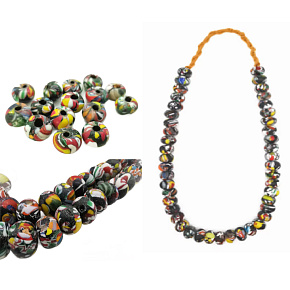
In Chinese glassworks, beads, vases, bowls, lidded containers, mugs, goblets, bottles, snuff bottles, etc. were produced. The Chinese were also the first to produce optical glass, which they used in eyeglasses.
The greatest peculiarity is that blown glass was not produced in China for many centuries. Only in the modern era did the use of the glassblower’s pipe, long already known in the rest of the cultured world, begin.
The enormous difference between Chinese and European glass products lies precisely in the fact that all older Chinese glass was cast into molds. Glass from European glassworks and from the Middle East has been blown with a glassblower’s pipe since the turn of the era, and its shapes are derived from a bubble, from a glass bulb. This glass carries within itself a distinctive shape, one that belongs only to it. In China, unusual, typically glass-specific forms never occurred; instead, cast layered overlay glass was produced, on which precise carving was applied, adopted from stone carving, which had been cultivated in China for a thousand years.
According to their chemical composition, silicate glasses are divided into the following types of glass:
- soda-lime – the glass is easily fusible, can be cut, and is suitable for blowing (such as, for example, old antique glass, Venetian glass, French glass, etc.),
- potassium-calcium (Czech glass suitable for cutting and grinding),
- sodium-potassium-calcium (glass commonly produced here today),
- potassium-lead (English glass; the glass is soft and glossy and is used for grinding, casting, and the production of optical glass).
In addition to these most common types of glass, there are also special glasses in which boron oxide or zinc oxide and lithium oxide occur.

/search_thin.svg)

/user.svg)
/cart.svg)

/heart.svg) Favorite
Favorite/compare.svg) Compare
Compare