/search_thin.svg)

/user.svg)
/cart.svg)
E-mail: info@energetickekameny.czTelefon: +420 606 647 298
DIORIT / DIORITE, stability – strength – grounding – perseverance
DIORITE, WHITE GRANITE, THE BEAUTY OF STONE
This type of stone is very durable and unique. However, its quantity is limited because of the extraction of natural stone. . It is an unusual and amazing stone.
Diorite is an intrusive plutonic rock of intermediate composition and normal basicity. In ancient times, for example in Ancient Egypt, it was used for processing granite. But despite its hardness, it is perfectly polished, and all the products made from it had strength and durability. It was also used for writing letters on it.
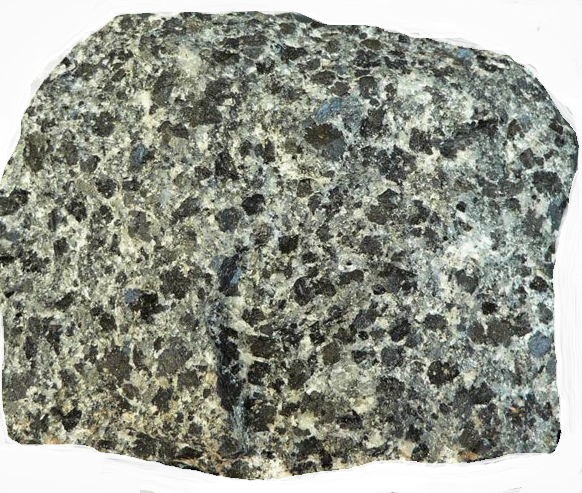
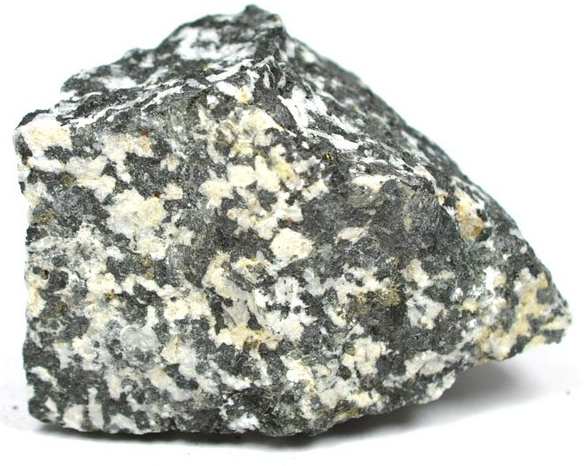
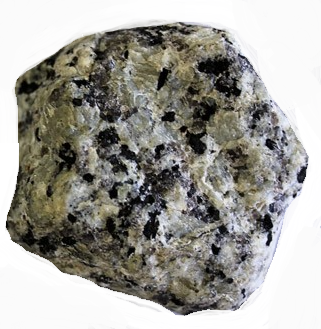
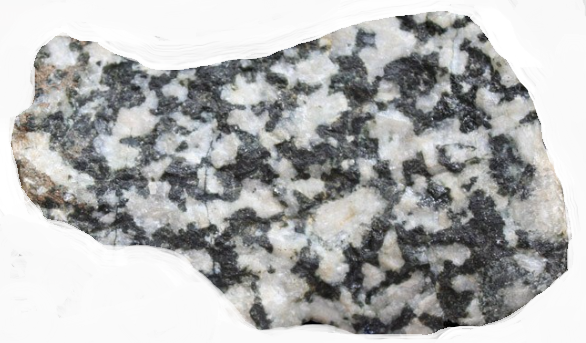
- To date, more than four thousand different types of stones have been studied, including diorite.
- Minerals exist in gaseous and liquid states. If a stone is melted or vaporized, it remains a mineral.
- Diorite is sold under the guise of granite because natural stone sellers use this name for all rocks that contain feldspars.
- Diorite is also sold as “white granite,” which is used in construction.
- It has high strength, close to diamond in terms of impact resistance.
- This type of stone is very strong, reliable, and durable, and in these properties it even surpasses granite.
- The age of diorite is a very ancient stone, it is more than 50 million years old.
- The stone contains feldspar, which gives it a greenish hue.
- It is not only strong, but also tough; it is this property that gives it excellent wear resistance.
- Diorite has a flexible effect that prevents it from splitting into pieces.
- As for compressive strength, it reaches two hundred and eighty megapascals.
- In ancient times, it was used as paper. For example, the Code of Hammurabi was carved into a block of this stone - one of the first collections of laws in human history.
LOCATION
- Diorite is excellent for use in construction because it is very difficult to damage the entire huge block, perhaps only if you use diamond. It is precisely thanks to these properties that it is very popular, and it is also very similar to granite, which gives it uniqueness and beauty.
- Diorite is used much less frequently as a material for laying floors or cladding staircases. This stone is usually used to produce various types of road stones, which are used for designing private plots. Most often it is crushed stone, as well as cobblestone, and in rarer cases wood chips. In such stones, grains of weak rocks should not exceed five percent.
- Diorite also has its disadvantages; for example, it does not polish very well and instead develops a greasy sheen, just like granite or marble.
- From the very beginning, even before our era, this stone was used to create sculptures instead of granite, which is many times more brittle than diorite.
- In ancient Egypt, people produced a huge number of statues, some of which have survived to this day. Until now, it remains a mystery how they could work this kind of stone, because it is difficult and crushing work, so they have now invented a method of diamond “grinding” that significantly simplifies this kind of activity.
- It is interesting that the oldest statues were found in Mesopotamia.
- Diorite has the ability to absorb polish, which is why this stone is cut into cabochons and is also used as a gemstone. For example, in Australia, a beautiful diorite with amazing pink spots was cut into cabochons and given the name “pink marshmallow”.
COLORS AND VARIETIES
Diorite can be categorized by composition and color.
- Quartz (based on the presence of quartz in the stone composition);
- Without quartz (presence of quartz in the stone composition);
- Hornblende
- Mica;
- Augite;
- Orthopyroxene (in terms of mineral composition);
- Clinopyroxene (according to mineral composition);
- Bipyroxene (in terms of mineral composition).
The following categories are distinguished by color:
- Brownish green;
- Brown-green;
- Dark emerald;
- Smoky;
- Gray;
- Ash.
SITE
This little-known type of stone is very similar to granite in many characteristics and indicators.
The main deposits of this stone are located in America. Deposits are located both in the south and in the north of the mainland, specifically:
- Cordillera;
- Chile
- Peru;
- Ecuador.
It is also widely distributed in:
- Great Britain;
- Kazakhstan;
- in the Urals;
- North Caucasus;
- Kabardino-Balkaria;
- Northern Europe.
Diorite is mined very actively in Sweden and Norway. In Kazakhstan, there are several fairly large deposits of this breed - Uvalnenskoye (Kustanai region) and Kapchagayskoye (Alma-Ata region). Diorite deposits are also in Ukraine. They are located in the Carpathians, where they occur in the form of deposits (vertical bodies, similar to pillars).
HISTORY AND TRADITION
Diorite is very similar to granite in origin and mineral composition. It forms at the boundary of plates where an oceanic plate meets a continental plate. During the partial melting of an oceanic plate, basaltic magma is formed, which rises and intrudes into the granitic rocks of the continental plate.
At this place, basalt and granite mix, and when this mixture crystallizes, diorite is formed. Diorite and granite belong to the group of rocks called granitoids. Diorite, however, contains less quartz than granite; its content never exceeds 20%. If there is more quartz, then it is no longer diorite, but granodiorite. When a volcano erupts diorite lava, it turns into andesine.
PHYSICAL PROPERTIES
Diorite belongs to the range of nominal alkalinity because it contains an average amount of silicon dioxide. It contains andesite (or oligoclase-andesine) and colored minerals. Hornblende most often acts as an impurity, less often pyroxene.
| Property | description |
|---|---|
| Specific gravity | 2.7 - 2.9 |
| Compressive strength | 150-280 MPa |
| Separate | Layered or parallel. |
| texture | Massive |
| Structure | Fully crystalline, evenly crystalline, from fine to giant grains |
| Color | Dark green or brownish green |
Average chemical composition:
- SiO2 53-58%,
- TIO2 0.3-1.5%,
- Al2O3 14-20%,
- Fe2O3 1.5-5%,
- FeO 3-6%,
- MgO 0.8-6%,
- CaO 4-9%,
- Na2O 2-6.5%,
- K2About 0.3-2%.
Priorities are characterized by a massive structure. It can have either a uniform or a fully crystalline structure (fine-grained or coarse-grained).
The stone can be called slightly brittle because it has high toughness. Diorite resists impact loads very well. As a cladding material, it is quite resistant to negative environmental influences on it. This breed has high resistance to weather conditions.
Recently visited products