
/search_thin.svg)

/user.svg)
/cart.svg)
E-mail: info@energetickekameny.czTelefon: +420 606 647 298
DUNIT / DUNITE, sauna magician – heat – resistance – stability
DUNITE / DUNITE PROPERTIES OF STONE, VOLCANIC ROCK
Dunite is a natural air purifier with a unique property: when heated, the stone reacts with carbon dioxide, thereby purifying the atmosphere in the room and eliminating the presence of foreign odors.Specialists from the Institute of Mineralogy awarded dunite the highest rating as a stone for use in baths and saunas.
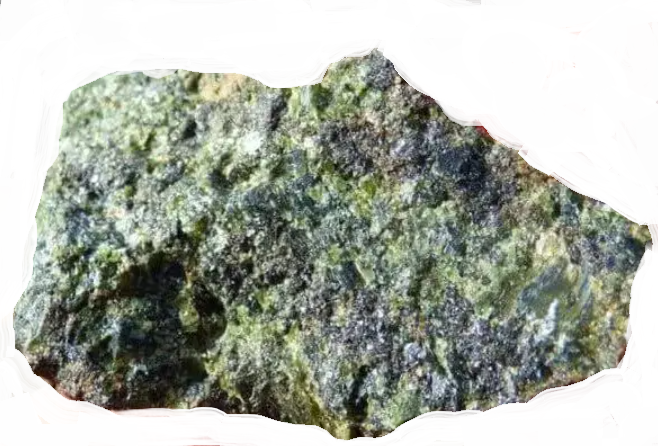
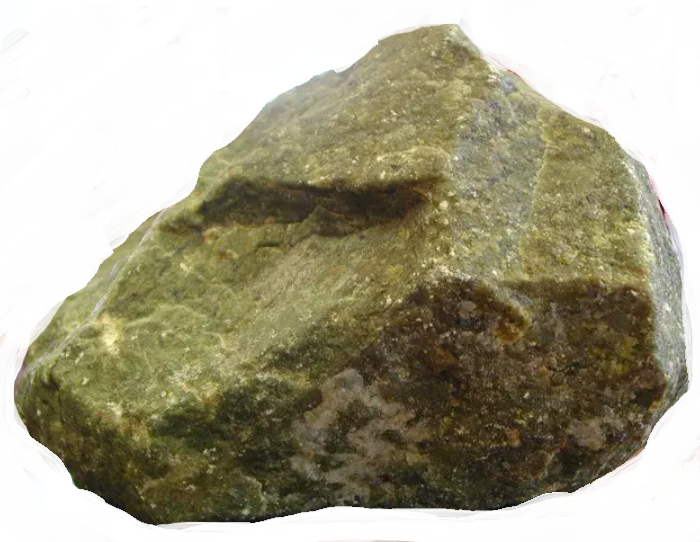
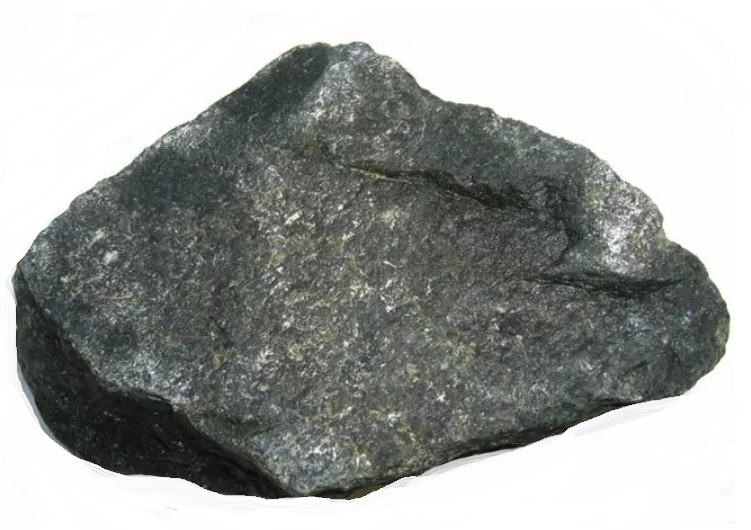
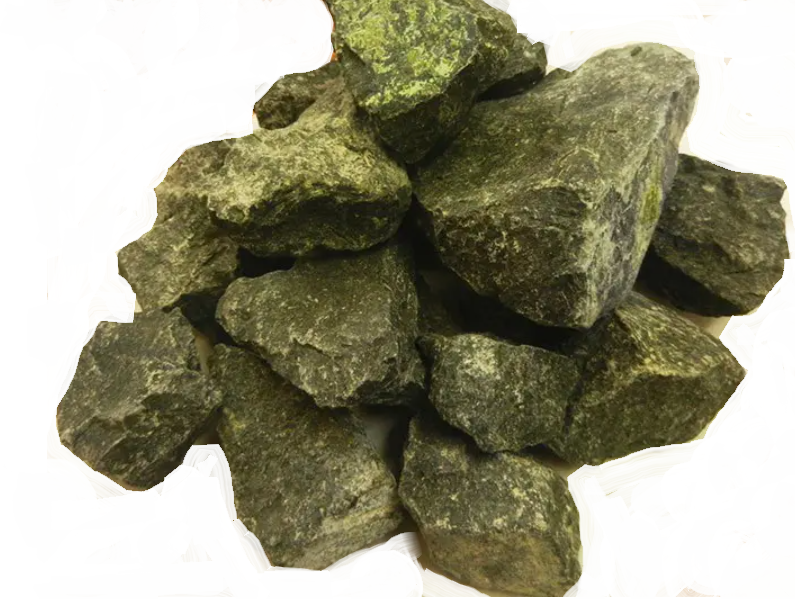
- Dunite from the Urals is the best type for use in a sauna. The stone should be placed at the bottom of the stove beneath layers of other stones used for therapeutic purposes. This increases the overall therapeutic effect, because dunite heats up quickly and retains heat for a long time. Use with white quartz and Himalayan salt supports air ionization and creates a cozy microclimate in the home sauna.
- The thermal stability of dunite is given by the low content of volatile substances in its composition. The stone can lose only 1.5% of its weight during calcination, so it does not crack.
- Dunite can be easily crushed into sand. In this case, olivine grains take on the role of sand grains.
- In the past, mineralogists believed that dunite could contain diamonds and platinum. There is unconfirmed evidence that such individual findings occurred, but in recent decades, despite intensive searching, no such breed has been found.
- An independent advantage of stone is its beautiful and unusual texture. Dunite has a huge number of shades and contains various decorative speckles that naturally find application in design.
Due to its unique properties, dunite stone is widely used in industry, agriculture, and also in interior design. And exceptional thermal stability and environmental friendliness, combined with the ability to have a healing effect, make dunite absolutely irreplaceable for use in baths and saunas.
HEALTH EFFECTS
The beneficial properties of dunite for use in baths are based on the presence of olivine in it (of which dunite contains much more than another widely used bath stone—dolerite), which has pronounced healing properties.
Bath procedures with dunite:
- normalize heart function
- lowers blood pressure
- boosts immunity
- strengthens the nervous system
- helps with colds
- is used for eye diseases
- is used for musculoskeletal disorders
- disinfects problematic skin
- increases libido in men
HABITAT
- As an ultrabasic igneous rock, dunite commonly occurs in the Urals and the Caucasus, as well as in the Baikal region, but its extraction is associated with certain difficulties. The Kytlymskoye dunite deposit, located in the north of the Middle Urals, is widely known.
- Outside Russia, the main deposit of this rock is Mount Dun in New Zealand; dunite is also found in Kazakhstan and Central Asia.
COLOR
- The color of these stones can range from light green to black. Sauna stones usually have a fine-grained to medium-grained structure. Thanks to the low coefficient of expansion, these stones are heat-resistant. These sauna stones do not contain any inclusions of toxic minerals or toxic gases. Dunite has good thermal conductivity and a unique heat capacity, resulting in rapid heating and the ability to retain heat for a long time.
HISTORY AND TRADITION
Dunite is a disruptive ultrabasic igneous rock. It is an extremely eco-friendly stone that contains no harmful impurities and does not release toxic substances when heated. It has high refractory properties, thanks to which it can be operated for a long time. In the Urals, dunite is traditionally considered one of the best stones for a bath.
- The mineral dunite got its name from Mount Dun in New Zealand, where it was discovered.
As a deeply seated igneous rock, dunite forms in the initial stages of lava differentiation, when olivine crystallizes from the melt and, in some cases, chromite as well. By settling at the bottom of the magma chamber, the mineral forms an almost monomineralic rock. The main component of dunite is olivine - it makes up 85-90% of it, which determines the color of the stone, ranging from dark gray to almost black and from yellowish green to dark green. Due to weathering, olivine, which is part of this rock, transforms into serpentine and partially into magnetite. Dunite rarely occurs in an unaltered form: it is usually largely serpentinized or even completely transformed into serpentinite. Chromium and magnetic iron ore are also often found in dunite. Dunite is usually found in the lower layered horizon of major intrusions.
USE
Dunite is widely used in the construction of baths and saunas for filling stoves and heaters:
- the low coefficient of linear expansion protects the stones from cracking during repeated heating and cooling, as well as when exposed to hot water;
- thanks to its granular structure, the stone has a unique heat capacity and at the same time increased thermal conductivity, which allows the heater to quickly heat up to the desired temperature and retain heat for a long time.
Interesting! The stone withstands heating temperatures of up to 1700 °C, which is why it is used for casting metals.
Dunite is also used:
- as a refractory material in metallurgical furnaces due to its refractory properties (a magnetite variety is used)
- as a construction material for refractory structures
- for the production of insulating linings in the steel industry
- in the production of refractory ceramics (an ilmenite variety is used)
- for the production of high-quality facing materials for bathrooms, swimming pools, etc.
- for floor coverings - such floors are non-slip and maintain a pleasant temperature in all weather
- as decorative stone
- when creating cement mixtures to increase the impact resistance of cement stone and concrete
- in agriculture to increase fertility; it is the best source of trace elements for growing potatoes (the magnetite variety is used)
PHYSICAL PROPERTIES
Dunite is characterized by a holocrystalline fine- to medium-grained structure, as well as a massive rock texture and high density. It is a mixture of olivine (up to 90%) with pyroxenes, amphibole, and chromite. This rock is also extremely rich in magnesium and contains very little silica.
We recommend reading: Andesite - properties of the stone, where it is applied
| Property | description |
|---|---|
| Density | 3.28 g / cm |
| Specific gravity | 3 |
| texture | Massive |
| Structure | Medium to fine-grained |
| Shine | No |
| Composition | Pyroxene, amphibole, olivine and biotite |
| transparency | Opaque |
| Daylight color | Light green to black |
Average chemical composition:
- SiO2 35-40%, MgO 38-50%, FeO 3-6%, Al2O3 up to 2.5%, CaO up to 1%.5%, Fe2O3 0.5–7%, Na2O up to 0.3%, K2Up to 0.25%, TiO2 up to 0.02 %.
Types of stone
In industrial mineralogy, the following types of dunites are distinguished:
- chromite - containing chromite (iron and chromium oxide) up to 30%;
- ilmenite - containing ilmenite (titanium iron) up to 36% and 4% accessory minerals;
- magnetite - containing titanomagnetite up to 30%.
Each variety has its own practical use.
Dunit is a relatively inexpensive stone. Its market price starts at 0.3 to 0.6 euros per 1 kg. Sauna dunite is usually sold in processed and packaged form in 20 kg boxes, which facilitates transport.
Important! The price should not be the very cheapest, because there is a risk that you may come across a counterfeit that releases sulfur when heated, resulting in the formation of sulfuric acid, which can be harmful to health.
Pyroxenite is also often sold under the guise of dunite, as it is easier to obtain because its price is lower, but due to high temperatures it can crack and release toxic substances