
/search_thin.svg)

/user.svg)
/cart.svg)
E-mail: info@energetickekameny.czTelefon: +420 606 647 298
RULA / GNEISS, transformation – resilience – stability – inner strength
RUNE OF THE STONE'S ABILITY
Among metamorphic rocks, gneiss is well-known and widespread. It is a stone similar to granite with light bands and lenses alternating with layers or dark-colored bands. The breed name comes from the German “Gneis” (a mining term of unknown origin). It covers a large area of land and forms an entire mountain range. Majestic stone structures stood at the pinnacle of many civilizations; stone served both as a weapon and as a surface for recording information or for the creations of the earliest artists
- material from the Earth's interior, shaped by complex processes whose power we can hardly imagine
- has a pleasant and natural effect
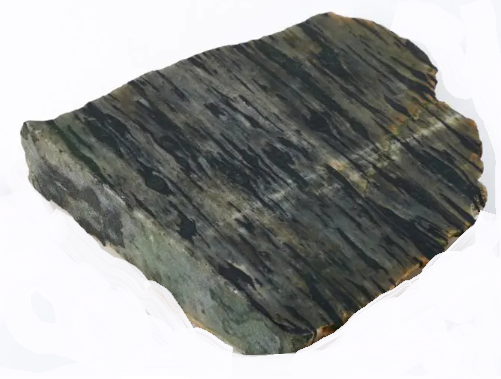
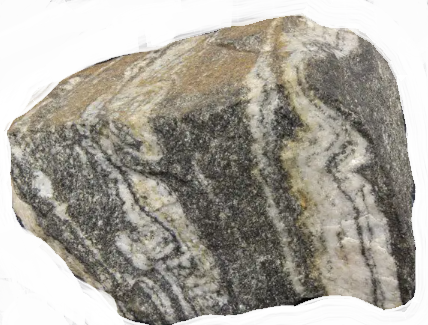
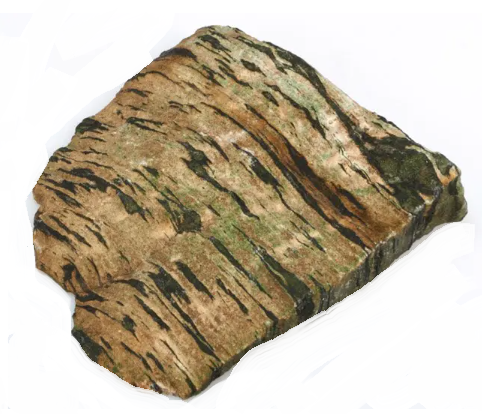
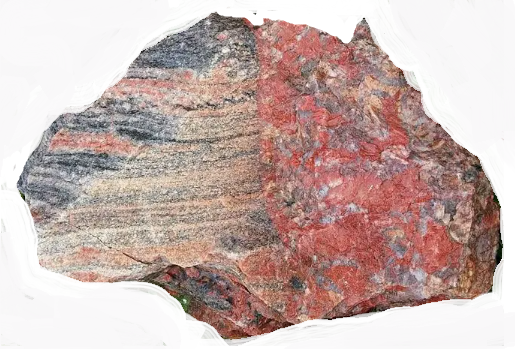
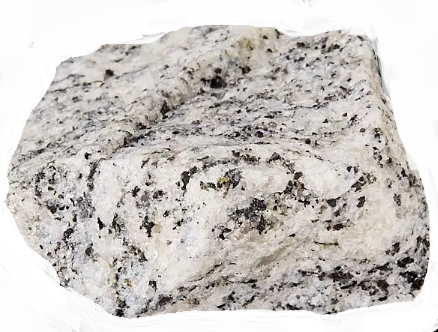
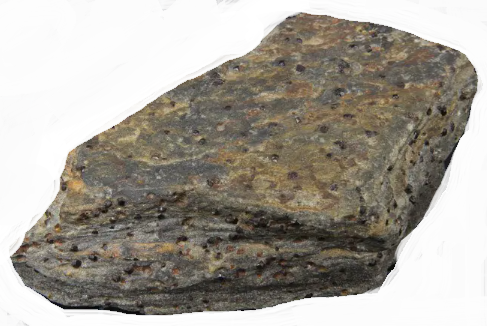
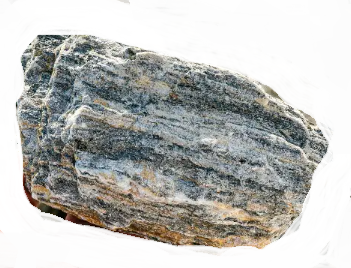
COLORS AND VARIETIES
According to the nature of the rocks that make up gneiss, there are: Orthogneisses, Paragneisses.
Orthorules are obtained by the transformation of igneous rocks. Pararocks are the result of metamorphic changes occurring in sedimentary rocks. .
With regard to structural composition and texture, gneisses are:
- Tree, Spectacle, Ribbon, Deciduous, Norite, Nepheline.
The criteria for distinguishing varieties of gneiss are the mineral and chemical composition, as well as the structure and texture of the rock. For example, all igneous rocks in which nepheline plays an essential role are classified as varieties of nepheline.
SITE
Slate is not as widespread as marble. Large formations of this rock are known in Scandinavia and Canada. Known Russian deposits are located in Karelia, Murmansk, and the Leningrad region. There are known large deposits in Ukraine.
- Gneiss deposits are developed in quarries.
- The mining industry is supplied raw, crushed, or lump.
- The method of separation from the rock mass depends on the physical and mechanical properties of the rock, the conditions of its occurrence, and the type of product that needs to be obtained.
The extraction of gneiss, like that of any other rock, is carried out in three main stages:
- Exploratory work is carried out first.
- Then the raw material reserves in the field are determined, a production project is prepared, and a feasibility study is commissioned. For these purposes, rock samples are taken, tested, and their physical and mechanical properties are determined.
- Field stripping operations.
- Then the quarry is organized; the actual rock extraction process is carried out in benches. The rock is separated from the massif.
HISTORY AND TRADITION
The origin of the rune, as before, remains a mystery and the subject of passionate debate. The available hypotheses are based on several of the following assumptions.
- Some experts consider gneisses to be remnants of the Earth's outer hard shell (the upper part of the lithosphere), formed during its transition from a fiery liquid state to solid matter.
- According to other experts, this rock is the result of an eruption, subsequently modified and having acquired lamination as a consequence of the effects of rock pressure, the pressure of gases and liquids contained in the rocks, and atmospheric pressure.
- There is also a version that the gneisses are a chemical sediment of an ancient ocean, which, due to the water temperature and the atmospheric pressure at the time, transformed into a crystalline state.
- Many consider them to be sedimentary rocks that changed over millennia under the influence of the Earth's temperature, pressure, and mineral waters. Or sedimentary rocks that crystallized immediately after deposition and have remained in this state to this day.
According to the way they are formed, three types of gneiss are distinguished: igneous, sedimentary, metamorphic.
- Metamorphosed gneisses (formed from igneous and sedimentary rocks through the process of changing their physicochemical properties).
- All runes are very old. The gray gneisses, which are the oldest, are four billion years old, which is almost as old as our planet.
- The most active period of gneiss formation occurred 2.5–2.0 billion years ago. Older ones are gray gneisses. Complexes of this breed are known on all major platforms. The Acasta Gneisses are considered the oldest formation composed of a complex of gray gneisses that outcrop in the Slave Province in the western part of the Canadian Shield.
- According to scientists, the oldest rock on the planet is the gray gneiss of the Acasta region, which forms the basement of the Slave craton of the Canadian Shield. They are 4 billion years old.
- Some gneisses are younger – they formed during the Cenozoic as a result of high-temperature metamorphism.
INTERESTING FACTS
- Gneisses are among the oldest rocks on our planet. By analyzing the zircons they contain, it is possible to determine the date of Earth's formation. Today, the oldest known zircon is considered to be the oldest zircon found in the Jack Hills gneiss in Australia. According to scientists, it is 4.4 billion years old.
- In mineralogical science, various definitions of the term “gneiss” are used. In fact, this stone is modified granite. Sometimes they cannot even be distinguished from each other. Slate, which in its weight and strength outwardly resembles granite, is cheaper than what architects and builders use.
MINERAL APPLICATION
- Schistosity reduces the construction properties of metamorphic rocks, especially frost resistance and strength in the direction parallel to the schistosity. Gneisses are therefore, in terms of their strength and outwardly, inferior to granite, but they are denser than the sedimentary rocks from which they were formed.
- The interest of breeders in this breed is understandable. Slate is usually not split along planes of weakness like most other metamorphic rocks. This allows you to use crushed stone from this rock in the construction of roads, places, and landscaping projects.
- This breed is widely used in the production of building stone (crushed stone and gravel). Pavers are used for the construction of various structures: buildings, temples, parks, sidewalks, courtyards, sidewalks. Gneisses that have high density and a beautiful structure (gneiss-granites) are used for decorating buildings and structures: wall cladding, columns, stairs, floors, and fireplaces.
- For laying foundations, facing embankments, channels, sidewalks, and as rubble, gneiss is used more often because it is easier to extract by splitting it into layers. Some ores are sufficiently durable to function well as dimension stone. These stones are cut or sawn into blocks and slabs used in various building, paving, and curb projects.
- Some gneisses have a bright luster and are attractive enough to be used as architectural stone. Beautiful floor tiles, facing stone, stairs, window sills, countertops, and cemetery monuments are often made of polished gneiss.
- The more gneiss rocks resemble the texture of granite, the greater their value. Banded and banded gneisses are considered the worst representatives of this breed.
- In industries such as “trade,” any rock with visible, interlocking feldspar grains is considered “granite.” The view of gneisses and other rocks marketed as “granite” worries many geologists. However, this long-standing practice of trading in dimension stone makes dealing with clients easier, because not everyone knows the technical names for unusual igneous and metamorphic rocks.
PHYSICAL PROPERTIES
| Property | description |
|---|---|
| Density | 2.65 - 2.87 g / cm³ |
| Porosity | 0.5 - 3.0% |
| Compressive strength | 120 - 300 MPa |
| texture | Banded or schistose |
| Structure | Granoblastic or porphyroblastic |
| Color | Gray, gray-white, brown, red |
Recently visited products