/search_thin.svg)

/user.svg)
/cart.svg)
E-mail: info@energetickekameny.czTelefon: +420 606 647 298
SULTANITE / DIASPORE / ZULTANITE / THANARITE, idea – goal within reach – success – creativity
SULTANITE STONE ABILITIES, PROTECTION - CREATIVITY - MAGIC
- Stone loves creative people. It does not matter in what field of activity a person is involved; the main thing is that they have charisma and talent, even if it is hidden within them. The mineral will bring its owner inspiration and the ability to act unusually in every situation.
- Talisman of pessimists. Skeptics will be able to optimistically organize their emotions and thoughts.
- Powerful amulet. The stone of sultans protects a person from any energetically negative factors (damage, love spell, evil eye) and bad people.
- Embodiment of ideas. With the help of the diaspora, any idea and goal will be within reach. NuGet won’t let you abandon the business you started halfway through to take on a new one.
- For those whom nature has not endowed with creativity or talent, sultanite will also be useful. The painting will help its owner look at reality philosophically, reflect on the meaning of their existence, and find unconventional answers to difficult questions.
Modern fortune tellers also use cracked diaspore to predict the future owner. It is also believed that maximum magical power is manifested by a gemstone set in silver.
Did you know that in the past, fortune tellers used non-gem-quality diaspora crystals to predict a person's fate. In return, those who wanted to glimpse into the future held stones in their hands, after which the witch threw them onto the glowing embers. The crystals cracked under the influence of heat, and shamans determined a person's fate according to the cracks.
HEALTH EFFECTS
- helps with mild headaches,
- slightly alleviates the body's condition during a cold
- helps overcome depression.
If the stone cracks or splits without prior mechanical stress, it may signal future financial or health problems.
ZODIAC SIGNS
Most astrologers claim that, with a few exceptions, the stone is suitable for almost all zodiac signs. Each person feels a different effect of the amulet.
- Aries will discover their unknown talent and become calmer, simpler, and more patient. Aries with philosophical thinking, the talisman will push toward seeking extraordinary solutions and developing incredible theories.
- Leo will feel a surge of strength and a desire to realize creative ideas from soy. The stone will endow them with the belief that everything that has been planned will be possible to accomplish.
- Taurus will be able to carry out actions necessary for a specific time and place. This trait will help them organize their personal lives.
- Virgos are guaranteed to gain romance, optimism, and dreaming. At the same time, a dose of practicality will also enter their lives.
- Scorpios, together with Virgo, will become romantics, which will somewhat smooth out their natural prudence. With such a talisman, Scorpio women will look more charismatic and charming.
- Libra with their changeable nature, because no one needs sultanite. The stone helps prioritize life, making Libra’s balance more stable.
- Sagittarius will experience a lack of prudence and patience. And long-term interaction with the mineral will, to a certain extent, awaken psychic abilities in Sagittarius.
- Aquarians are pragmatic by nature. The oriental gemstone will help them free themselves and see the world through the eyes of a romantic and a dreamer.
- For Capricorns, the amulet promises harmony of feelings. When they need to focus on work, Capricorns will be pragmatic. When it comes time for romance, they can easily be arranged in the right way.
The stone will bring nothing to the other signs; it can only be worn for beauty.
COMBINATION WITH OTHER STONES
The diversity of colors depending on the lighting imposes limitations on the selection of neighboring stones for the gemstone.
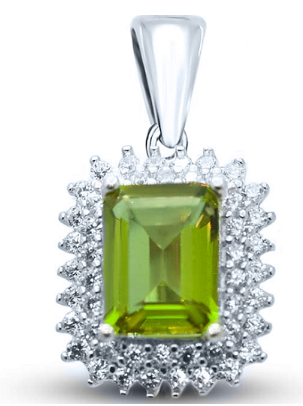
- The best combination is with noble transparent stones: diamond, topaz. It will look good with black, green, and blue crystals: emerald, sapphire, aquamarine... An experienced jeweler should choose the right shade.
- Opaque, matte semi-precious stones and gemstones are not suitable “partners” for it. The ideal setting metals are white metals: platinum, silver, gold.
- The yellow color of the frame cheapens the appearance of the jewelry.
COLOR AND VARIETIES
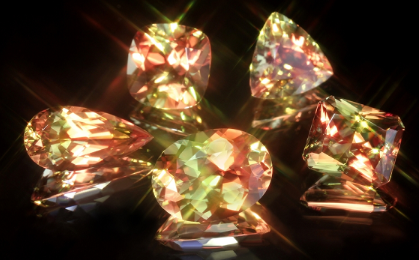
Sultanite – a semi-precious stone, known in the scientific world as diaspore, is considered Turkish heritage. Examples of jewelry are a great rarity, shrouded in mystery. This mineral is as fragile as it is beautiful. Diaspore, with its ability to change colors like a chameleon, has even surpassed Alexandrite.
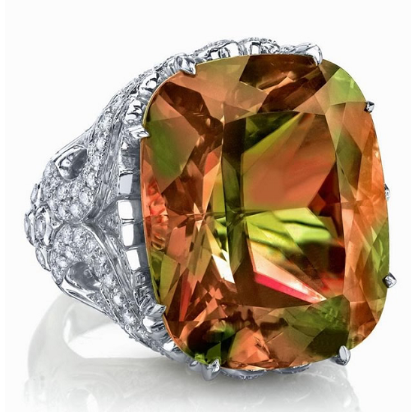
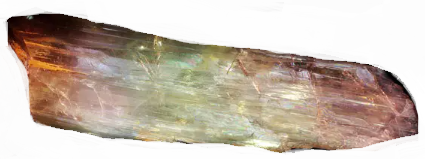
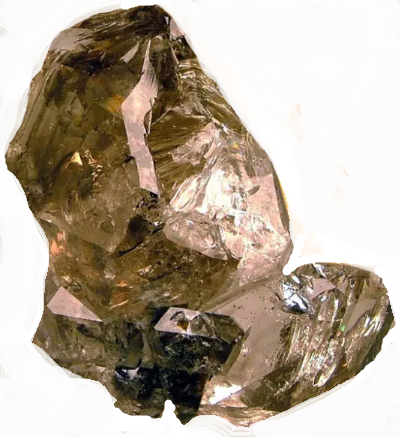
- Transparent crystals of Turkish sultanite are light green in daylight; bright sunlight gives them a greener hue. In the interior, depending on the light and when rotating the edges, pink, crimson, amber, and brown shades are visible. Legend says that jewelry with this stone was presented by sultans to their wives and concubines.
- More intensely colored, but less transparent stones have a basic amber color with transitions into red, bright yellow, and blue shades. This species is classified as a semi-precious stone; it also has its fans.
- The increased brittleness of the mineral makes cutting more difficult. It breaks into pieces a lot. Only highly experienced craftsmen are capable of working with crystals.
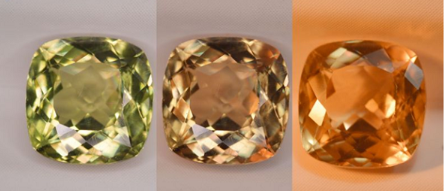
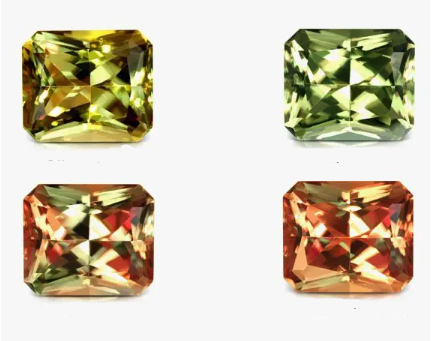
Sultanite is varied and uneven. When the lighting changes, the play of colors is fully revealed. Zultanit will reveal itself:
- All shades of green, from grass to dark khaki in daylight.
- Radiant yellow in the light of lamps and chocolate coffee at candlelit dusk.
- Red in fireworks and red in a light bulb.
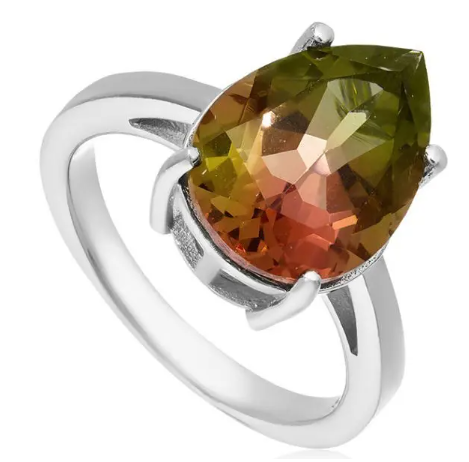
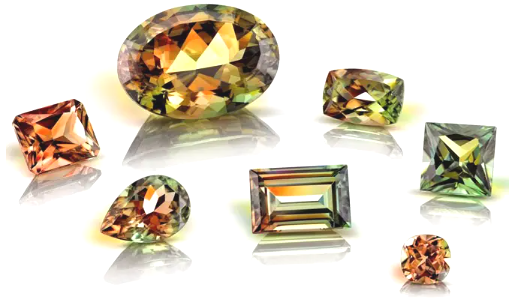
The best diaspores are green-pink or pink-brown. Under mixed lighting, sultanite is capable of displaying all shades simultaneously.
Diapside is endowed with the alexandrite effect - the ability to shimmer with basic shades under different lighting conditions. Despite its vitreous luster, the gemstone also has a pearly luster.
Types of stone color depending on the lighting.
SITE
- The purest gemstones with the alexandrite effect of flower iridescence come from Turkey, from the Selcuk deposit at an altitude of 1200 m in the Anatolian mountains. Jewelry made from these stones is sold under the registered trademark Sultanit.
- The place where jewelry-grade sultanite is mined is the Ilbir Mountains, located in the southeastern part of Turkey. The deposit is unique, the only one of its kind on the planet. Turkish authorities keep the nugget reserves and all information about it under strict secrecy.
- Less well-known are jewelry pieces with stones from Hungary, China, Macedonia, Norway, Greece, and Slovakia.
- Thanatarites from the Russian deposits "Kosoy Brod" and "Saranovskoye" in the Urals are characterized by unusual colors: lilac, cherry, grayish, but due to their low transparency they belong among collector's crystals. Yakut minerals are more transparent, but they still do not reach gemstone quality.
HISTORY AND TRADITION
The mineral is considered a relatively young stone. Its history does not go back thousands of years. The name “sultanite” is Russian, and the origin of the word is obvious. The first mentions of the stone can be found in the ancient chronicles of Eastern sages.
- Written sources state that at that time, sultans and their immediate entourage were honored to wear the diaspora. The padishahs adored this stone and generously showed off jewelry with the mineral to their many wives. It is known that the noble Sultan loves a sublime setting, worthy of his greatness.In a frame made of low-quality metal, diaspora fades and loses its play of colors. Historically, the Turks used this property to determine the authenticity of gold. If the gemstone faded, then the gold was not real.
- In addition to the scientific name “diaspore” and the name “sultanite,” there are also other names for the stone. In the historical homeland of the gemstone (Turkey), the mineral is called “zultanite”. The name “thanatarite” belongs to gemstones of Ural origin. Initially, thanatarites were called ferruginous kyanites. A little later, the mineral was named after one of the Russian geologists, Joseph Tanatar.
- The first diasporas were discovered in the territory of Russia, near Yekaterinburg at sunset XNUMX. century. The stone acquired its mineralogical name thanks to its physical property - brittleness (translated from Ancient Greek, “diaspora” means “crumbly”).
- The stone officially entered mineralogy in 1801 thanks to the French scientist René-Just Haüy. On the lands of the Ottoman Empire, zultanite was discovered later than Ural alexandrite, but today this stone is considered a symbol of Turkey and the country's main treasure.
- The Turks also claimed the title of the gemstone’s homeland, because it is precisely on their territory that indecently large specimens of sultanite used in jewelry are mined. No other deposit in the world, especially the Urals, yields nuggets suitable for processing.
- In fact, sultanite is the gemstone variety of the mineral diaspore. The world first heard about him only in 1977. And the jewel did not make its way to the jewelry store until even later - in 1994.
- The report on the existence of the sultanate spread through an article in the scientific journal Gems & Gemology. The publication states that the deposit of this rare stone is the only one on the planet and is located in Turkish lands.
- Today, even women love the sultan, because the concubines from the sultan’s harems loved him. This stone shines upon its owner with the brightest colors, making her unique in the eyes of others.
FACTS
- The maximum size of a cut crystal is 30 carats.
- Jewelers note that natural sultanite “senses” the metal from which the setting is made. Next to low-quality or fake gold, the gemstone weakens, and when it is replaced with real gold, it comes back to life.
CHEMICAL PROPERTIES
From a chemical point of view, diaspores are aluminum hydroxide with the formula AlO(OH): 85% aluminum oxide Al2O3 and 15% water H2A. When heated, the water evaporates and destroys the crystal structure. White boards made of Al2O3 corundum, a more durable mineral.
The gemstone’s variable color is caused by impurities:
- manganese - pink, purple;
- chromium - green;
- iron - yellow, reddish, brown, depending on the concentration.
PHYSICAL PROPERTIES
Diapsores are of metamorphic origin: rocks containing aluminum oxide were exposed deep within the Earth to ultra-high temperatures and components of magma. The result is that the mineral acquired special properties:
| Luster | Glass, nacre |
| Transparency | Transparent, translucent |
| Fracture | Bark-like |
| Density g / cm3 | 3.38 |
| Mohs hardness | 6.5-7 (between opal and garnet, scratches glass, can be worked with diamond) |
| Crystals | Rhombic needle-shaped inclusions are rare |
| Thermal stability | It does not melt, but decomposes |
| Brittleness | Very brittle |
| Color | Green, yellow, pink, gray, brown, white, red |
Despite their brittleness, the crystals do not interact with concentrated acids - hydrochloric and sulfuric.
ARTIFICIAL SULTANITE
The consumer market today offers two options for substitutes for natural gemstones:
- Hydrothermal sultanite. It is no wonder that the Turks themselves, in the homeland of this natural mineral, create its artificial analogue, because sultanite is very rare and valuable. Stone extraction is limited and demand is high. The process of creating the substitute consists of growing crystals from aluminum oxide hydrate gels under high pressure and temperature (up to 1000 °C). In this case, a chip of natural gemstone is used. Without the help of an expert, it is not possible to distinguish such a stone. For fair sales, the product mark is designated "g / t" (hydrothermal). An artificial analog is also not considered fake as such - it is a stone created by humans by reproducing natural conditions. Hydrothermal sultanite is much cheaper than a natural nugget.
- Nanosital. This is the latest patented Russian technology for creating analogues of precious stones based on aluminum oxide and silicon dioxide with the addition of other components necessary for the formation of a specific gemstone. The synthesis temperature reaches 1700 degrees. Rusgams has already created and patented more than 10 different types of stones with an alexandrite effect, which can only be distinguished by an expert. The label on these stones bears the mark “sitall”.
Only a jeweler can help you recognize whether the gemstone before you is natural or an imitation. There is, however, one main difference - the price. Real sultanite costs as much as a diamond and is not sold on every counter in every store in the country.