/search_thin.svg)

/user.svg)
/cart.svg)
E-mail: info@energetickekameny.czTelefon: +420 606 647 298
SCAPOLITE, protection against the “evil eye” – safety – inner strength
SCAPOLITE STONE ABILITIES, LOVE - STABILITY - STUDY
The most highly valued of all are cat's eye stones. They are considered amulets. Cat's eye can preserve love, protect against betrayal, against the “evil eye,” bring stability into relationships, and even make its owner invisible in battle.
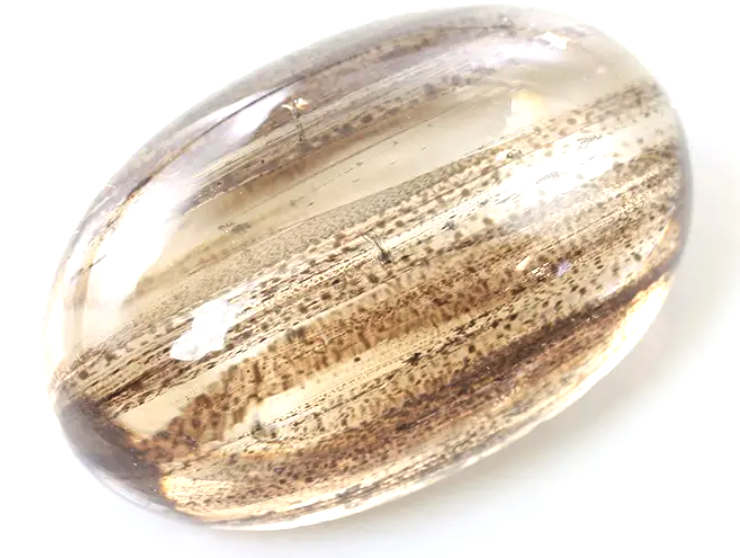
- Cat's eye relieves feelings of fatigue and activates the body's defenses.
- acts like an oracle: depending on the situation, it will be warm or cold, thereby pushing for changes or warning against them.
- Scapolite is also called the student’s stone because it helps assimilate large amounts of information and supports anyone who is trying to learn something new.
- The stone helps focus and increases concentration.
- Scapolite develops intuition and strengthens willpower.
- It gives confidence to indecisive people and tells people with a strong character the only correct solution to the problem.
Scapolite jewelry and rough specimens can be used as a talisman.
HEALTH EFFECTS
- it is attributed the ability to normalize blood pressure,
- improve vision and treat headaches
- it helps overcome depressive states and restores peace of mind
- a round stone is used during massage
If you carry scapolite with you, you can recover quickly from surgeries and injuries.
ZODIAC SIGNS
In astrology, the stone is considered the patron of the sign of Taurus.
COLORS AND VARIETIES
Scapolite is named after the characteristic shape of its columnar crystals (in Greek, scapos - rod, pillar). General name for a group of sodium-calcium aluminosilicate minerals.
- Marialite was first described in 1866 by the German explorer Gerhard von Rath. The snow-white mineral is named after the scientist's wife, Marie-Rose.
- Mayonite was discovered by crystallographer Rene Gayuy. He gave the new mineral a name meaning “smaller,” which is due to the less pointed crystal forms of meionite than those of the associated Vesuvius.
- Sylvialite is the last rare member of the isomorphic scapolite series.
Some scapolite minerals are characterized by dichroism - an extraordinary optical effect manifested by a change in the stone's color. This phenomenon is caused by the birefringence of scapolite. A beam of light passing through a crystal is dispersed and weakened.
Human vision perceives these transformations as a change in color. It all depends on which side you look at the stone from. Sometimes it is not the color itself that changes, but its saturation and tone. In scapolite, dichroism is very pronounced. Such varieties are called pink moonstone.
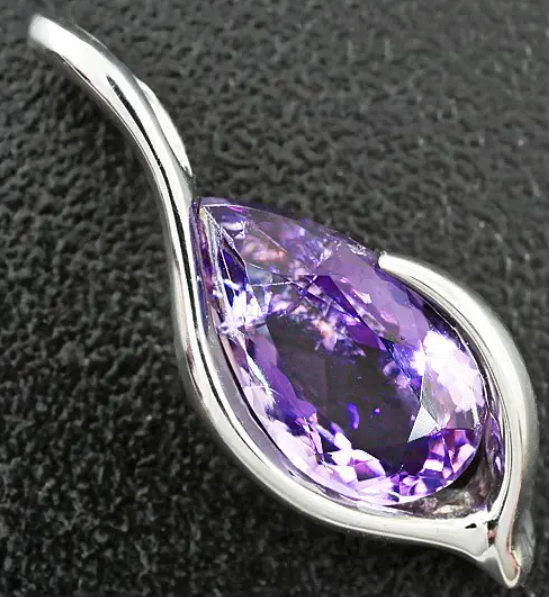
- Purple scapolite minerals were first discovered at the beginning of the 20th century. A Century in Burma.
- There are scapolite specimens that exhibit a "cat's eye" effect — a glare moving across the surface in the form of a white band of light. Such “iridescence” is associated with the presence of internal cavities in the mineral structure, parallel to the principal axis of symmetry. Interestingly, the band of glare moves when the stone is rotated.
- The phenomenon of asterism is not foreign to scapolites. By rotating the stone at different angles, you can see a star formed by intersecting rays of light on its surface, which moves as it moves. This phenomenon is associated with the smallest inclusions in the crystal, oriented parallel to each other and to the principal crystallographic axes. The most visible “stars” appear in cabochons. The number of rays and the angle of intersection are determined by the crystal symmetry system.
- Ultraviolet light in some samples exhibits fluorescence in the yellow-orange range.
- To intensify the color of the crystals so that it is richer, scapolite is exposed to gamma rays. Yellow swatches turn purple. However, bright sunlight causes these stones to fade.
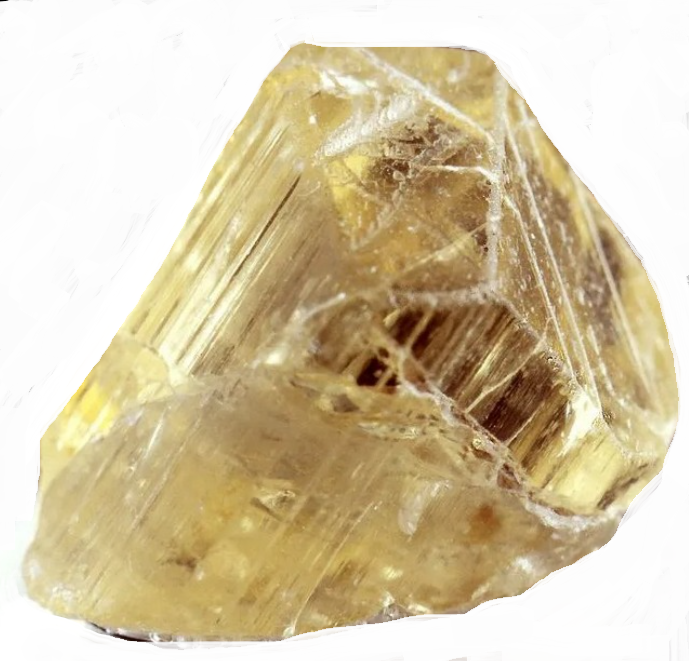
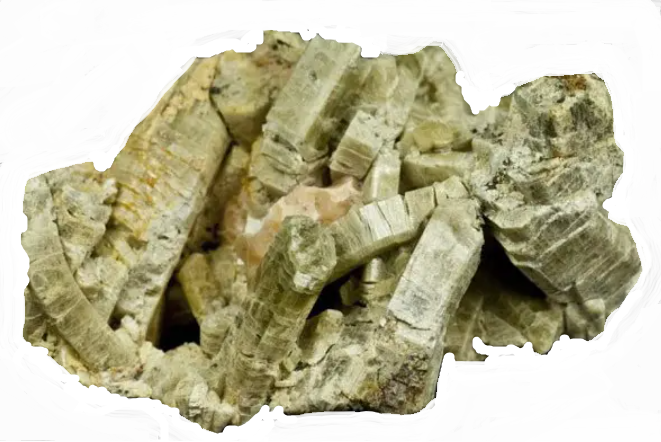
The crystal shape of scapolite is a well-formed elongated prism terminated by a low blunt pyramid. The mineral can crystallize only in cavities. It occurs in the rock in the form of irregularly shaped granular inclusions or nests. Sometimes they form solids.
VARIETIES
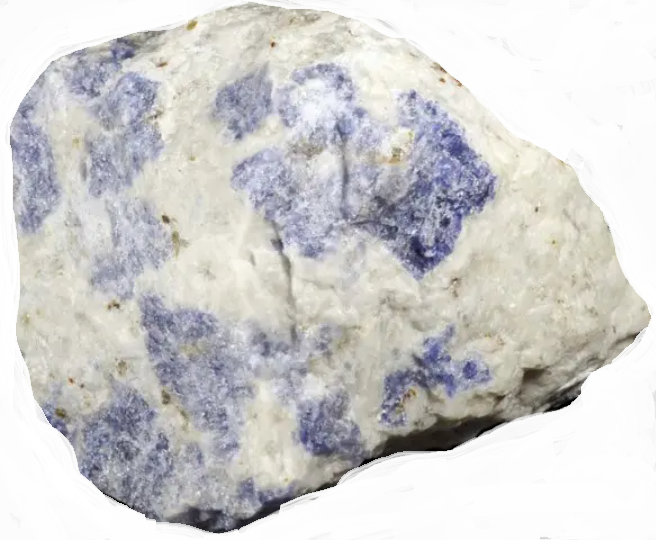
- Glavkolite (marialite) is a blue, light blue mineral. It was first discovered on the Slyudyanka River in the Baikal region. Looks like Lazurite, accompanies him, and is sometimes mistaken for him. Lapis lazuli rock consists of lapis lazuli, calcite, quartz, and glavcolite.
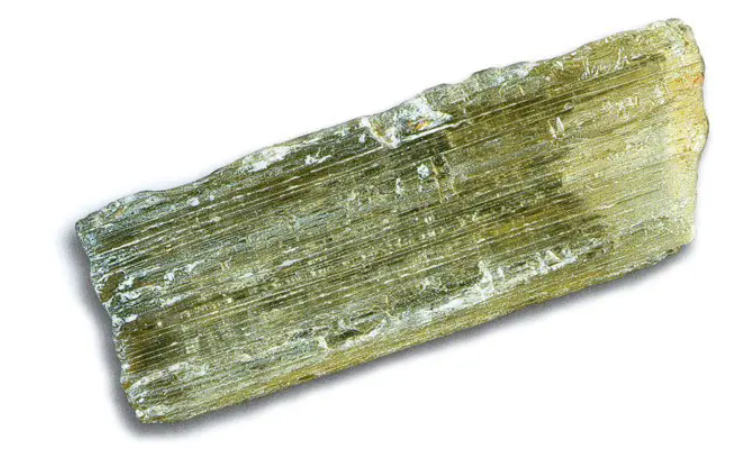
- Stroganovite is straw-yellow, sometimes gray-green.
- Sarkolite is a red, fiery red, pinkish-red rare species found in the volcanic deposits of Vesuvius.
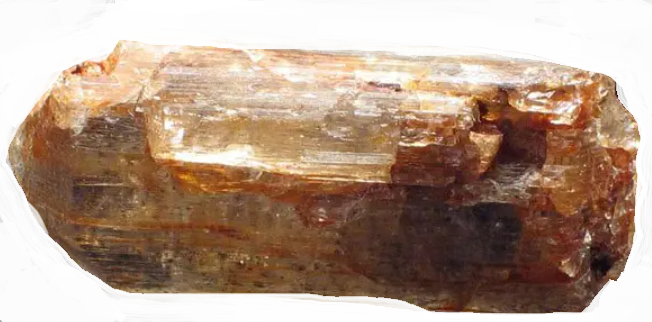
- Pechit - purple, opened in 1975 in East Africa.
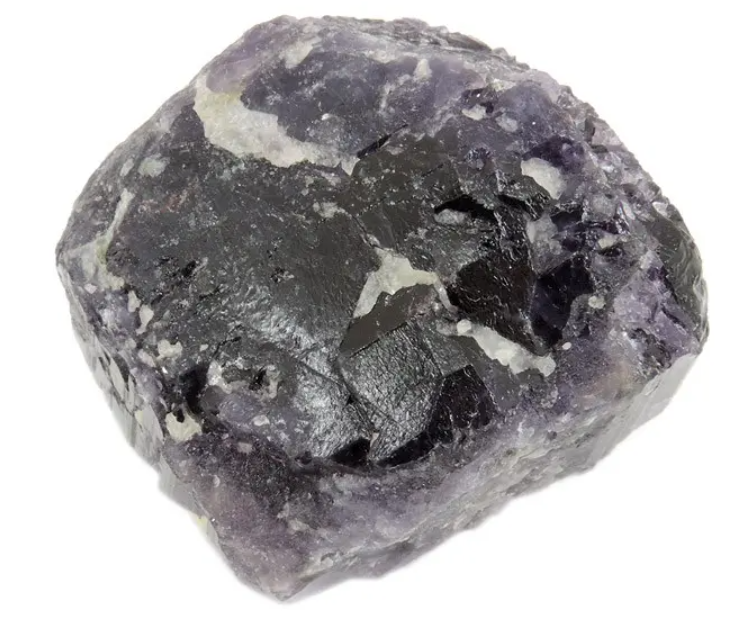
- Ussingite - various shades of purple. Faded on the exposed surface. There are light pink and colorless crystals. Discovered in Greenland.
SITE
Scapolites are found in the alluvial sediments of rivers, as an accessory mineral in beryl mines. Beautiful collector's specimens can be found on spoil heaps in surface mines.
- In Russia, scapolite has long been found in the southern Baikal region on the Slyudyanka River. The color of the Bajkal varieties ranges from yellow to blue-violet.
- Minerals are widespread in Yakutia and Kazakhstan.
- The Kukurt deposit in the Pamirs of Tajikistan is renowned for its gem-quality specimens.
- Occurrences of the mineral are known in Europe - in Italy, Germany, and on the Scandinavian Peninsula.
- Scapolite discovered in the USA and Canada.
- Gemstone samples are mined in Madagascar and Myanmar (Burma).
- Brazilian deposits became famous for transparent honey-yellow crystals measuring 40 cm in length and up to 10 cm in diameter.
The most notable examples of treated scapolites are light yellow specimens from Tanzania. Its weight is 130 carats. No less remarkable is the orange-red stone from Ceylon, which exhibits asterism and weighs 118 carats.
HISTORY AND TRADITION
Scapolite was discovered on Mars. There is a hypothesis that the mineral is more widespread on this planet than on Earth, which is associated with the large amount of carbon dioxide in the atmosphere of Mars.
Scapolite (from Latin.scapos - pillar, staff) is a group of sodium and calcium aluminosilicate minerals with varying composition, identical in crystal lattice, but differing in chemical composition and specific gravity.Minerals contain encrypted information; they are the key to the cipher, you just have to know how to unravel it. No wonder the ancients attributed magical properties to them.
Transparent crystals of beautiful color are used as a cutting material.
- Blue glaucolite is an excellent ornamental stone.
- A brilliant cut is applied to transparent stones, while translucent stones are cut as cabochons.
- After the discovery of the pink variety in Burma in 1913, jewelers took notice of scapolite. Burmese stones differ in color. There are white, pink, purple, yellow ones. In all of them, except the yellow one, the “cat’s eye” phenomenon is observed.
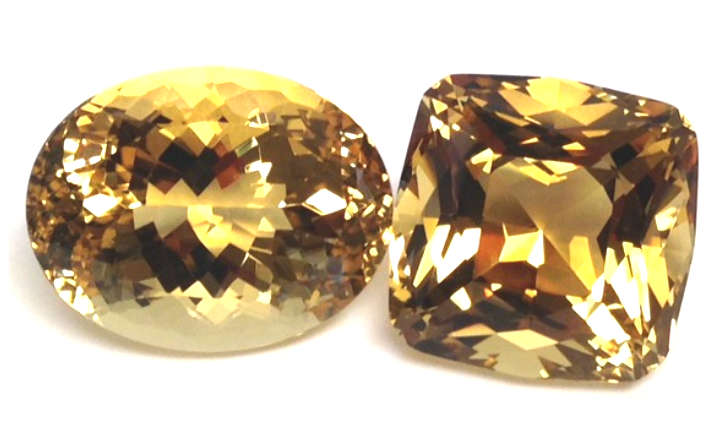
- In Brazilian and Madagascan specimens, the yellow color ranges from dull to rich golden. There are also grayish-lilac varieties.
- Gem-quality yellow scapolite was recently discovered at the Umbra deposit in Tanzania.
Due to its fragility, the mineral is more often used in earrings and pendants, as it is believed that in rings or bracelets the stone can easily become deformed.
Scapolite prices vary depending on color, transparency, the presence of optical effects, weight, and the cutting method. Pale yellow samples are considered cheaper. On websites, the price per carat of such a stone is approximately 20 euros. Light lilac scapolite is already more expensive. Here you will have to pay more than 35 euros per carat.
PHYSICAL PROPERTIES
The mineral has unusual physical properties. Its coloration is allochromatic, i.e., variable
- yellow to orange; green; blue pink transparent and colorless or matte colors - of volcanic origin; purple (characteristic of minerals forming pegmatites).
Chemically, they are considered to be isomorphic mixtures of two silicates: Ca4Al6Si6O25 (25.1% calcium oxide, 34.3% aluminum oxide, and 40.6% silicon dioxide) and Na4Al3Si9O24Cl (11% sodium, 18% aluminum oxide, 61.1% silicon dioxide, and 6.9% sodium chloride) in various proportions.
| Property | description |
|---|---|
| Formula | (Na, Ca) 4 [Al3Si9O24] Cl |
| Hardness | 5 - 6.5 |
| Density | 2.57 - 2.74 g / cm |
| Refractive index | 1.540 - 1.560 |
| Crystal system | Tetragonal |
| Fracture | Conchoidal or brittle |
| Cleavage | Perfect |
| Luster | Glassy or waxy |
| transparency | Transparent |
| Color | Yellow, pink, purple, sometimes colorless |