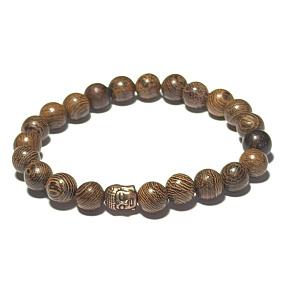
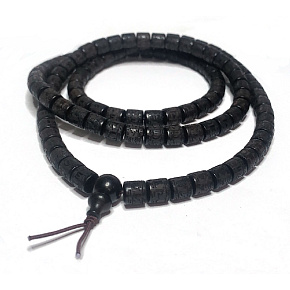
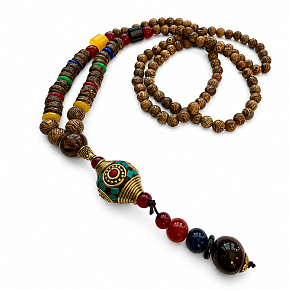
WOODEN MATERIALS
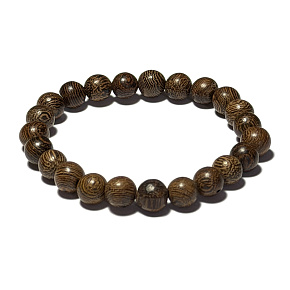
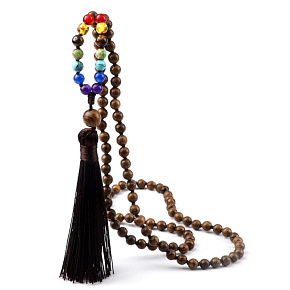
The energy of wood enhances intuition, gives strength, supports creativity, prevents self-harm, brings inner peace, and helps against depression, fear, and states of exhaustion.
- important for personal well-being,
- supports one’s own efforts aimed at improving family relationships and strengthening family bonds
Wood energy is important
- for growth,
- for new beginnings
- for health
- increases vitality
- supports physical development
The energy of wood is symbolized by the colors green and brown, which are used for rooms intended for eating, children’s rooms, or places where a new project is being created. Like the water element, wood energy is lively and nourishing, suitable for supporting health and well-being, at home and in the office
SANDALWOOD
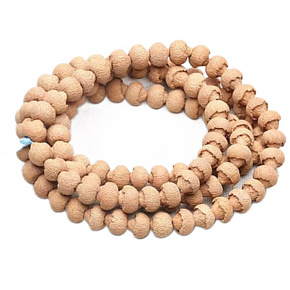
This fragrant exotic wood from the Santalum album tree grows in South India and is the most widespread species of sandalwood. Its naturally heavy fragrance is already renowned and will give your beads a touch of true Oriental charm. However, the fragrant essential oils contained in this special wood may gradually weaken over time and with constant wear, until they disappear completely. Part of the natural aging process of this wood is also the fact that sandalwood gradually darkens over time due to sunlight and regular wear. Despite this nature, it is still a sought-after material.
- Widely used in healing for its antiseptic effects
- Sandalwood is said to calm emotions and activate the lower chakras. It can therefore calm angry emotions and support inner stability and a sense of security.
- It is dedicated to the Hindu god Ganesha
- It is said to help its owner overcome obstacles and create new opportunities.
SANDALWOOD - WHITE
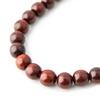
SANDALWOOD - RED
Red sandalwood, although it has very similar properties to white sandalwood, comes from a different tree and usually has no natural fragrance. However, it is sometimes added to the beads later using fragrant oils.
- This tree is also associated with the lower chakras and evokes a sense of safety and inner balance.
- Sandalwood gives us a sense of grounding, which is needed for a person to stand firmly with both feet on the ground and be able to think with a cool head.
- The beads are much glossier than beads made of white sandalwood, and their ornament is their rich red color and shine.
SANDALWOOD CARE
- From time to time, wash with a soft brush or sponge under running water with a little soap.
- After washing and drying in the shade, oil the beads with mustard oil.
- If you want to preserve the scent of sandalwood, you can also add a drop of sandalwood oil to the mustard oil.
EBONY WOOD
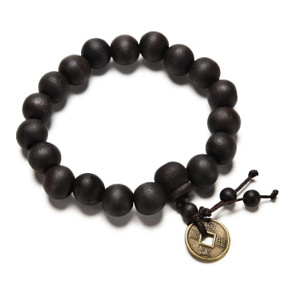
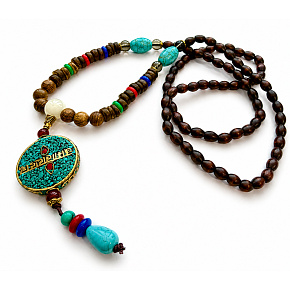
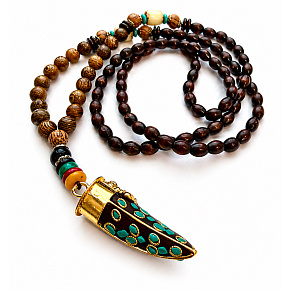
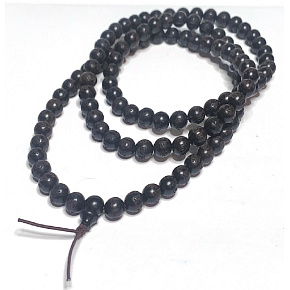
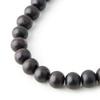
Ebony wood from a tropical tree found primarily in West Africa is an exceptionally hard and durable material. Thanks to its hardness, it does not deteriorate like other woody materials. The beads made from it are mostly lacquered, which gives them an exceptional shine, and they are smooth to the touch. Ebony is primarily associated with Christianity and symbolizes fatherhood and light in the darkness.It is said to be known primarily for its ability to protect its owner from negative influences and charge them with pure energy. Perhaps that is why it has always been a favorite material for making samurai swords. Ebony wood is especially popular for its durability and rich dark color.
EBONY WOOD CARE
- This material does not require any special care, as its dark color makes signs of aging less noticeable and it is also highly resistant to impacts.
- If the beads begin to lose their shine over time, simply rub them with almond or coconut oil.
- Although the beads are varnished, we do not recommend leaving them in water for a long time.
ROSEWOOD
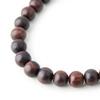
Rosewood comes from several different trees that grow in regions such as eastern India, Bolivia, or Honduras. The beads may have a slightly pinkish to brown color and are smooth to the touch. Since this tree is associated with feminine energy, it is said to help bestow charm and beauty upon its owner. Rosewood is associated with a kind of dark energy, which does not necessarily mean anything bad. On the contrary, thanks to this quality, it helps things get all the way to the depths and get to know one's own inner self. It is also used as a travel talisman, as it is said to be able to evoke a feeling of home anywhere.
ROSEWOOD CARE
- From time to time, you can wash the beads under warm water, gently clean them, and let them dry.
- For a higher shine, you can use oil.
RUDRAKSHA ABILITIES
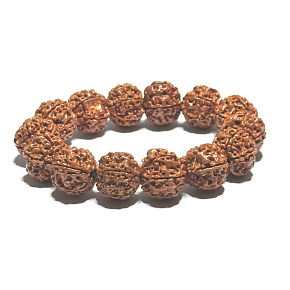
Rudraksha is Shiva's divine gift for the benefit of humanity. Beads have carried spiritual and healing effects within them for thousands of years. Whoever carries them with them is under strong protection from everything negative.
- protects against negative energy
- improves intelligence and self-awareness
- cultivates wisdom and intellect
- increases concentration and sharpness
- helps with endurance
- helps against stress
- acts as an energetic shield in which our energy is reflected back into ourselves
it is an ideal talisman especially for travel, as it protects us from surrounding influences, helps us fall asleep in any environment, and is even said to help properly digest foreign food
- helps remove intellectual dullness and gain spiritual faith and insight
- is very beneficial for students, scientists, teachers, writers, journalists, and researchers
- is strongly recommended for those preparing for competitions
- helps singers and speakers achieve greater success in their fields.
HEALTH EFFECTS
Helps people with timid, shy, or repressed tendencies and enables them to achieve a growing sense of uniqueness, self-esteem, and creativity
- helps against headaches,
- brings mental strength,
- treats eczema and blood pressure problems,
- strengthens the heart and nervous system
- alleviates asthma and other respiratory disorders
- helps treat diseases related to the thyroid gland
RUDRAKSHA CARE
- We recommend cleaning Rudraksha jewelry once every three weeks under warm water with a soft brush.
- After cleaning, let it dry naturally.
- If you are planning a longer stay in water or contact with chemical agents, we recommend always removing your jewelry.
- You can also give the jewelry a subtle shine by gently massaging coconut, almond, or sesame oil into the beads.
HOW TO WEAR RUDRAKSHA
- Rudraksha absorbs the energy of its wearer; no one except you should touch it
- according to Hindu tradition, especially if it is used during prayers, it should not be worn if its owner is currently consuming meat and alcohol
- it is not recommended to wear it while washing with chemical soap
- on the contrary, it is beneficial to wear it while showering in cold water (provided that no chemical soaps are used)
From time to time, we can gently clean it with a brush, let it dry naturally, and then apply oil, ideally sesame, almond, or coconut oil.
HISTORY AND TRADITION
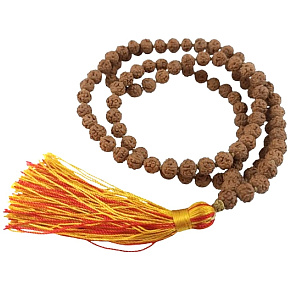
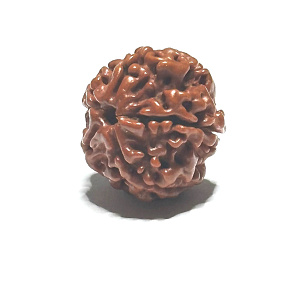
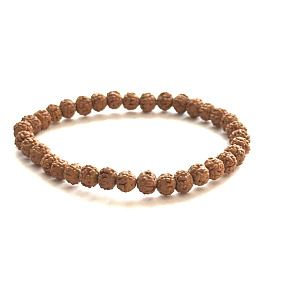
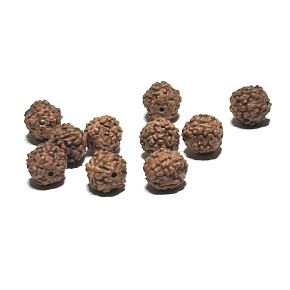
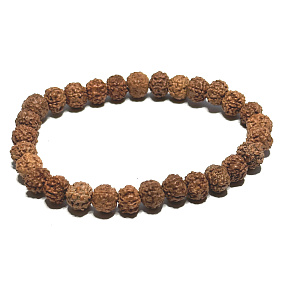
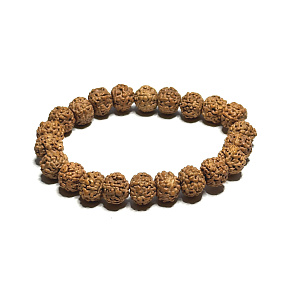
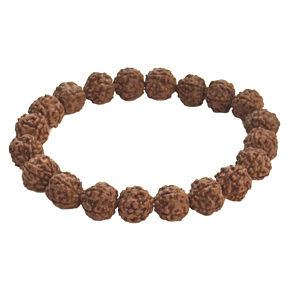
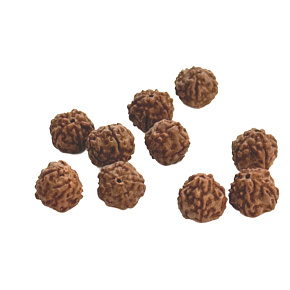
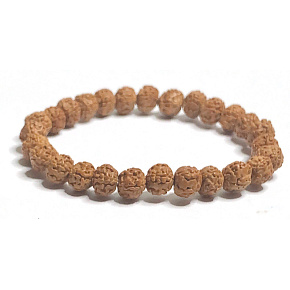
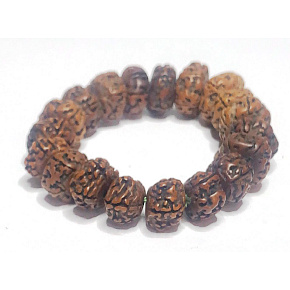
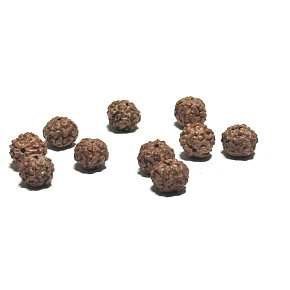
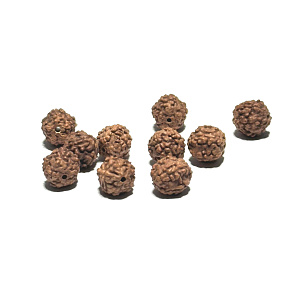
Rudraksha is the natural seed of the Elaeocarpus ganitrus tree, which is found in Southeast Asia, Nepal, India, and the Himalayas. This woody seed is associated with a Hindu legend involving the god Shiva. Shiva is said to have wandered the earth for a long time, contemplating humanity, until one day he sat down on the ground and decided to meditate for 1,000 years. At the end of his contemplation, he was so moved that his eyes began to shed great tears, from which large mighty trees grew all around. The fruits of these trees were then given the name “God’s tears,” or Rudraksha. These seeds were said to bring their owner mental balance, increase concentration, and suppress signs of aging. They are also said to help with ending relationships and old habits. It is believed that whoever wears it should notice increased energy after just a few hours of the Rudraksha being in contact with the skin. In addition, the seeds may differ according to their segmentation, called “mukhi,” which you can recognize by the longitudinal lines on the seed. The more “mukhi” layers it has and the smaller the bead is, the rarer it is.
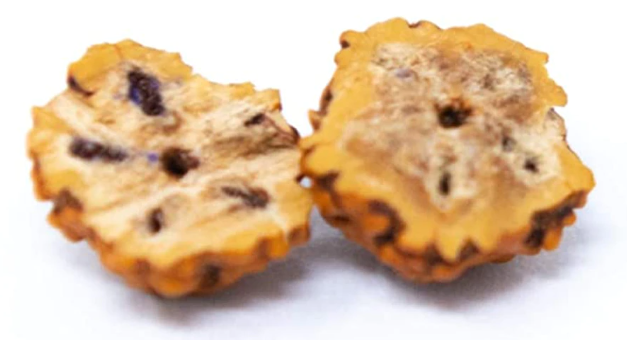
Mukhi is an Indian word derived from the word “mukh,” meaning “face,” so we can translate it as “shaping”. Thanks to these longitudinal wrinkled lines on the seed, one can tell how rare the seed is and what its spiritual properties are. Thanks to the mukhi, we can also determine whether it is a genuine Rudraksha. If we cut the seed crosswise, we must find inside the same number of chambers as the number of “mukhi” lines on its surface. The one-mukhi Rudraksha is most commonly counterfeited. We can also determine its purity and quality by dropping it into water. If it sinks, it is a genuine Rudraksha. The reason is that artificial Rudraksha is made from synthetic materials and is hollow inside. Real seeds float on the surface of the water for a while and then sink. However, it is also necessary to take the weight of the bead into account. Small beads, although they are genuine, are not heavy enough to sink underwater.
Rudraksha can have 1-21 mukhi. Among the most common and most frequently used are 4-6 mukhi. Although the one-mukhi Rudraksha is rare, Hindus mostly do not wear it, because each mukhi has its own power, and the 1 mukhi Rudraksha is said to compel its owner to leave their family within 12 days, because after that they can no longer bear to be among people.Rudraksha with 5 and 15 mukhi is used most often, as it is said to contain the strongest elements of the god Shiva.
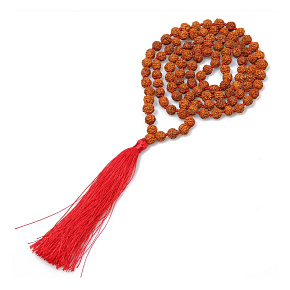
Rudraksha are evergreen trees originally native to the Nepal region, although today they extend along the Himalayas all the way to India.Elaeocarpus ganitrus grows in enclosed spaces and ripens during October and November. Its fruits have a beautiful deep blue color when they are fully ripe, and then they begin to darken to gray or black. These fruits, although edible, have no distinctive taste and are used only for making Mala necklaces. After the fruit darkens, its husk is trimmed and then it is brushed until only the seed remains, adorned with the characteristic layering called mukhi.
AUTHENTICITY TEST
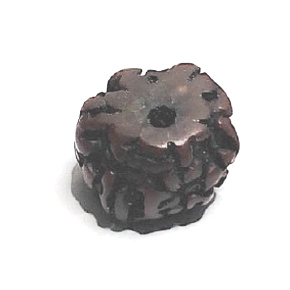
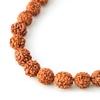
The cross-section of the seed is shown in the image, which reveals 5 cavities, illustrating that it is a natural seed. Internal cavities cannot be carved into artificial beads. Each seed differs slightly from the others because it forms naturally.
BODHI
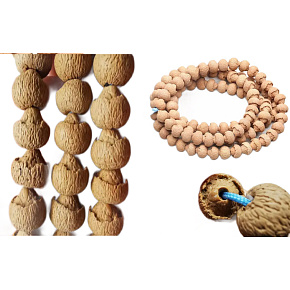
Bodhi beads have a naturally raw texture with slight cracks and are made from the rare Ficus religiosa. The tree is truly rare, as its first variety was destroyed in 7. century. In its place, the monks managed to grow a new tree from a shoot, but it met a similar fate in the 19th century. century, when it was struck by lightning. Despite all this tragedy, the tree continues to exist thanks to a shoot from Sri Lanka and continues to bear small Bodhi seeds, which are very important both in Hinduism, as they are associated with one of the oldest and most powerful gods, Vishnu, and for Buddhists. Legend has it that exactly under this tree, 2,500 years ago in India, Buddha attained his enlightenment. Bodhi seeds are said to help with concentration and a clear mind and are especially popular during meditation, as they help induce a state of inner emptiness, which is highly praised in Buddhism.
BODHI CARE
- As with other woods, Bodhi can be washed with a soft brush under running warm water, optionally with a little soap, and left to dry on a towel.
- To add shine, massage coconut or almond oil into them and wipe them off. In dry areas, oiling the beads must be repeated more often.

/search_thin.svg)

/user.svg)
/cart.svg)

/heart.svg) Favorite
Favorite/compare.svg) Compare
Compare