
/search_thin.svg)

/user.svg)
/cart.svg)
E-mail: info@energetickekameny.czTelefon: +420 606 647 298
AUGIT / AUGITE, joy – optimism – life energy – contentment
ENHANCE THE STONE'S ABILITIES, JOY - SUCCESS - WEALTH
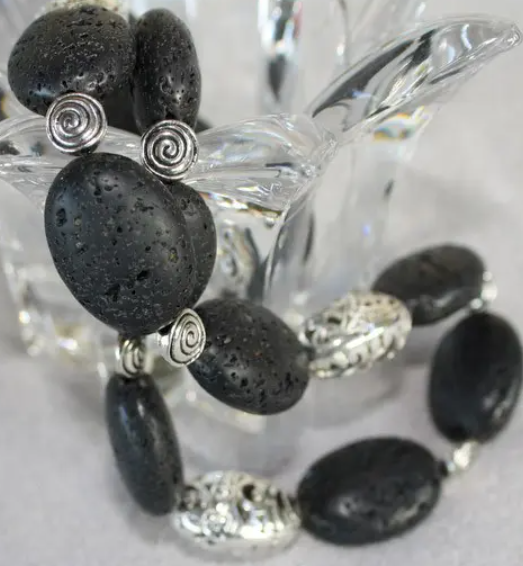
symbolizes joy and pleasure; it is believed to attract success and wealth to its wearer. It is recommended to have it as a talisman for people who are not indifferent, who go through life courageously, with an active attitude toward life. The "Vegetable" frame enhances the spiritual power of the stone.
- distracts the owner from impulsive actions,
- helps allocate time properly and build a rhythm of life
- helps one think rationally,
- balances positivity and negativity in a person
- improves quality of life and ultimately leads to business success
- the owner of the gemstone will certainly feel a change for the better.
The color of the mineral is in a way “responsible” for the changes.
- Brown will cheer you up, rid you of fear and depression.
- Green will help avoid conflict or mitigate its consequences.
- Black activates creativity
HEALTH EFFECTS
- Traditional healers use it to treat eye diseases, heart and vascular diseases
- black-green augite is often used as a form of love magic (powder from the mineral is sprinkled into drinks)
- it is believed that mental disorders are also subject to the influence of the dark gemstone
- improves conditions caused by diseases of the cerebral cortex
- calms and balances, alleviates depression, induces an optimistic mood
ZODIAC SIGNS
When determining who it is suitable for and for whom the stone is unnecessary, it should be kept in mind that the astrological properties of the universal mineral affect representatives of the zodiac signs differently:
- In Aries, it develops organization, punctuality, and protects health.
- Taurus protects against the evil eye.
- Gemini become more confident in their abilities with the help of augite, and are less emotional and temperamental.
- The jewel acts on Cancer like a personal physician. Improves the function of the heart and blood vessels, and has a beneficial effect on eyesight.
- Leo helps to cope with problems, provides support.
- Virgos feel that with the augite amulet they are more attractive to the opposite sex.
- For Libras, it is easier to help others.
- Scorpios, who have become owners of augite jewelry, normalize the nervous system.
- Sagittarius will feel a desire for spiritual life and will succeed in creativity.
- Capricorn will strengthen relationships with relatives and colleagues.
- The compatibility of the mineral with Aquarius is ideal.
- In Pisces, the stone will develop creativity.
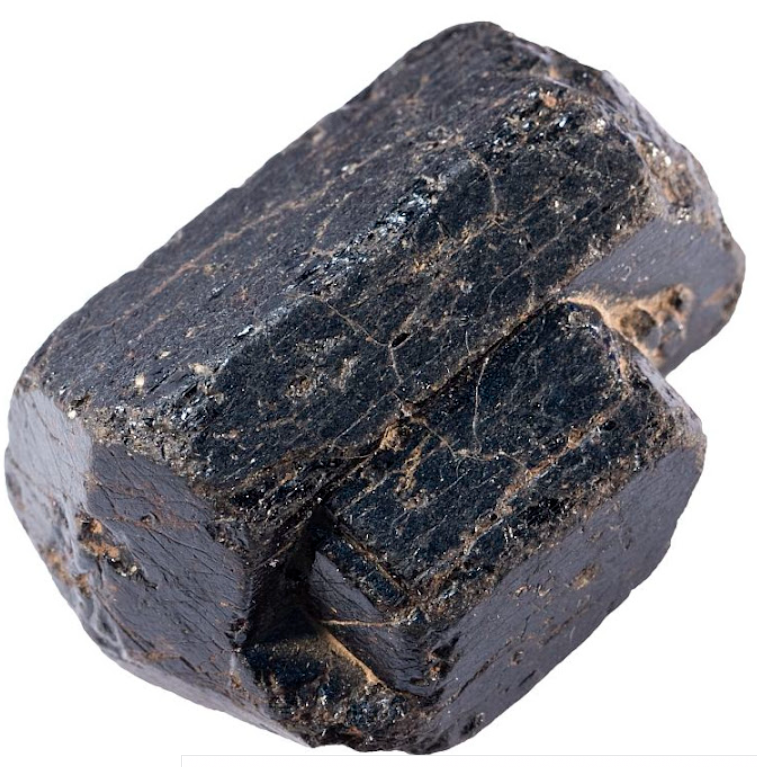
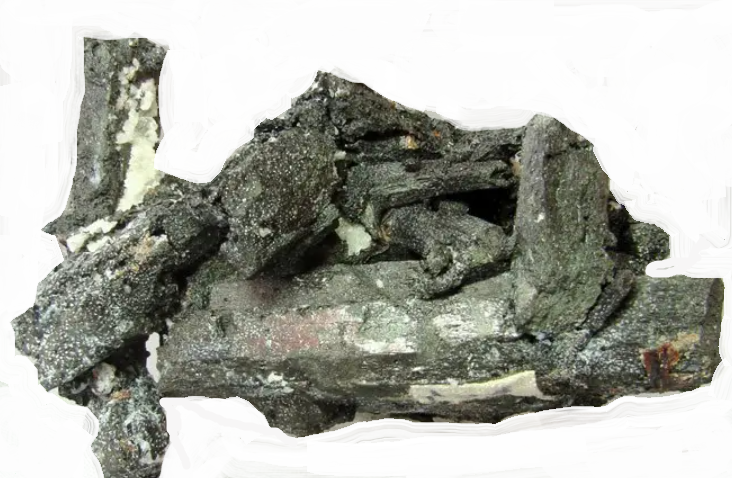
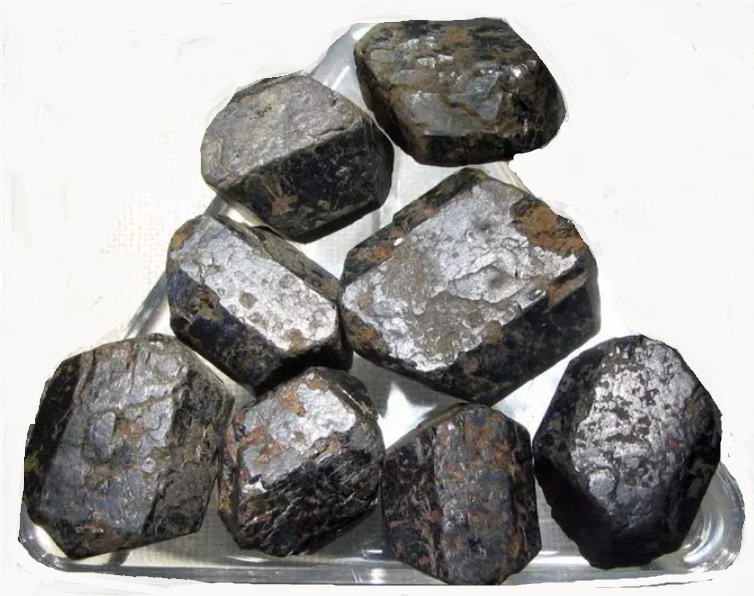
From the perspective of esotericists, there is no single zodiac sign for which augite would be contraindicated. Magical properties are not affected by name, clothing, or hair color. Anyone can use a gemstone to foster the growth of material prosperity, happiness, and new successes. You can wear it on any finger.The stone from the pyroxene group is very widespread. The appearance is modest because the color is dark – from green with a hint of brown to black. But the mineral’s inner radiance reaches in various shades. Unlike its counterparts, which only begin to shine after polishing, augite shines even without any treatment. It is used as an inlay in jewelry making. More in demand as a collection material.
SITE
The mineral is found on most continents.
- In Europe, it is mined in Italy (where the purest and most beautiful crystals are found), in the Czech Republic, Slovakia, Germany, and Ukraine. In Russia — in Yakutia, Karelia, the Urals, on the Taimyr and Kola peninsulas, in Kamchatka, near Lake Baikal, and in other places of Eastern Siberia.
- The African countries Kenya and Namibia boast deposits of augite. They can even find this mineral in Greenland. It exists in Australia, India, China, the USA, Canada, and Mexico.
- In the Earth's crust, varieties of augite make up up to 4 percent, but the mineral is not mined as a separate mineral.
HISTORY AND TRADITION
The fact that Augita is rightly called heavenly is not surprising. Scientists have proven that meteorites falling to Earth contain various types of augite. Studies of lunar soil samples have also shown that the particles that make up this mineral are found in the regolith.
Augite was found in the vicinity of the Saxon town of Freiberg. At the mining academy, the mineralogist A. taught. Werner, who studied and described the gemstone at the end of the 18th century. century. He also gave the mineral a name that, according to some of Werner's colleagues, does not suit the stone.The mineral was stored in the academy's warehouses for a long time. After thoroughly examining the sample under a magnifying glass and conducting a series of studies, the professor came to the conclusion: despite the sample’s “dull” appearance, give it the name “augite,” that is, “sparkling.” The stone was assigned to the flint group.
PHYSICAL PROPERTIES
The mineral is a multicomponent silicate. Depending on which element predominates, augites are distinguished into those with more magnesium, those with more iron, and those in which they are evenly distributed. In addition to these two metals, the composition of augites contains, to a greater or lesser extent, chromium, calcium, aluminum, titanium, sodium, and aluminum.
| Property | description |
|---|---|
| Formula | (Ca,Na)(Mg,Fe,Al,Ti)(Si,Al)2O6 |
| Hardness | 5 - 6.5 |
| Density | 3.2 - 3.6 g / cm |
| Crystal system | Monoclinic |
| Fracture | The mineral is flexible, elastic, splits into sheets |
| Cleavage | Average over {110} |
| Luster | Glass |
| transparency | Translucent or opaque |
| Color | Black and greenish |
Other names for the mineral are augite spar, volcanic schorl, violatite. Types of minerals are:
- stellate asteroid;
- basalt (black augite);
- diallage;
- titanaugite;
- fassaite and a number of others.
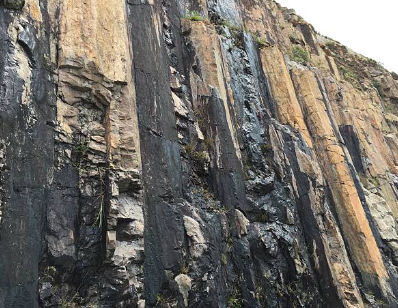
When weathered, augite becomes similar to opal. The stone looks dull. Samples with a reddish, yellow, or purple tint are valued, but the crystals are usually brownish-green and greenish-black. When melted, it turns into glass. The coloration is uneven, which is why landscape motifs appear - outlines of a river, a tree, a flower, a rock. The stone forms perfectly smooth surfaces when split thanks to the perfect cleavage of its layers.