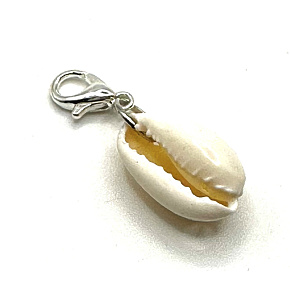
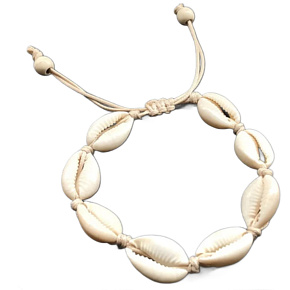
KAURI SHELL - MONEY COWRIE - CYPRAEA MONETA, LUCK - FERTILITY - LIFE FORCE - PROTECTION
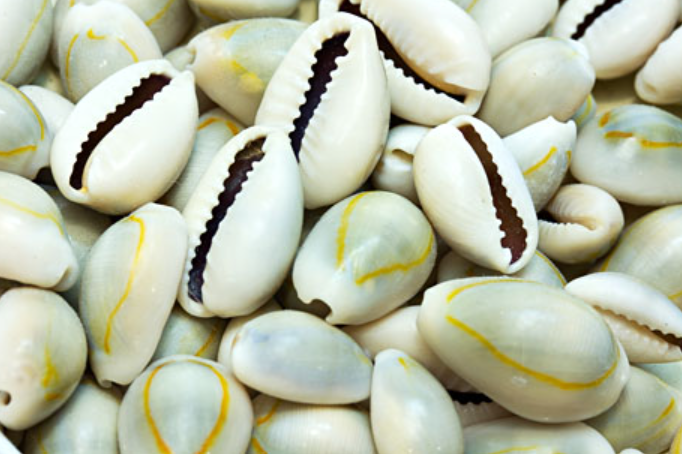
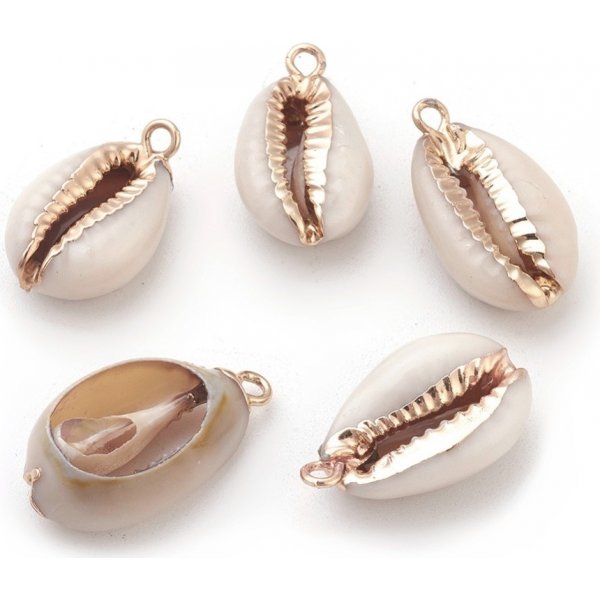
- shells of good fortune
- are associated with fertility and prosperity - they attract wealth
- have magical power; many women have already used their help with fertility problems, during pregnancy, and in childbirth
- bring respect and humility
- the life force slumbering in secret
- symbolize a connection to nature
- shells (also snail shells) were in all coastal cultures of the world a symbol of fertility
- the shell represented a protective and nurturing principle
HISTORY AND TRADITION
Exotic currency with a long tradition: the cowrie shell
They were the most widely used and oldest currency in the history of money. The name “Kauri” is derived from a Greek word meaning piglet, apparently due to a certain resemblance to the back of this animal. Cowrie shells are known not only as the first currency, but they also played a role in the earliest form of messages. On the coast of the Gulf of Guinea, the natives still "correspond" today using cowrie shells, for example: one shell means a negative answer, two shells turned toward each other mean friendship, and whoever wants to declare love must use six shells side by side.
In Africa and in regions of South and North America, cowrie shells symbolize the power of fate, and it is believed that the toothed mouth (the shell’s opening) belongs to the Orisha spirit, which through it teaches people humility and respect.
- Kauri money is a means of payment made from the Kauri snail. For many thousands of years, it was a currency used primarily in East Asia and Africa. Its origin can be traced back to the Maldives, from where it spread across almost all of Asia to Africa and various islands of the Southern Hemisphere.
- In China, from 1500 BC until AD 200l. it was even legal tender.
- To this day, there is no other currency anywhere in the world that has managed to establish itself across such a vast and culturally diverse area. The U.S. dollar has not managed to do that to this day, nor did the British pound in the days of the British Empire.
What exactly made the Kauri shell an almost perfect global currency? It could be easily carried, and due to its natural shape, it was impossible to imitate. Thanks to these properties, it also entered the dark history of human society—the slave trade—where it became a highly sought-after means of payment. The long tradition of this means of payment led colonial powers to begin even before 1. By the World War, to set a fixed exchange rate for this currency. Many African cultures nevertheless retained their original currency well into the 20th century. century
To this day, we find countless references connected to the past. This is how, for example, new currencies came to be named after the original names of means of payment.
- An example is the Cedi, the current official currency of Ghana. Cedi actually means Kauri in the language of Ghanaians. The original currencies are still partly used today as a second currency.
- For example, in Papua New Guinea, the original shell currency called Kina is still used today.
- This currency is even officially recognized as the currency of the indigenous inhabitants, and in 2002 the world's first shell bank was even opened there!
- In the Caroline Islands, different currency is used even depending on gender. Women use money made from small shells called “jar,” and men use very large, flat stones resembling round millstones called “rai” or “fei.”
- Other, very strange means of payment are used throughout Oceania. “Tooth money” (made from the teeth of rare animals), or “feather money,” which are used primarily in social rituals such as weddings or funerals.
Gradually, however, means of payment made from precious metals began to be used in most countries of the world as a precursor to today’s coins. Such means of payment were weighed and were very often in the form of bars. These then very often broke off, and fragments of precious metals were thus used for payment. The next step in the history of means of payment was coins. At first clumsy and very simple, later artistic and beautiful. But more on that in the next article.

/search_thin.svg)

/user.svg)
/cart.svg)

/heart.svg) Favorite
Favorite/compare.svg) Compare
Compare