CHAROITE ABILITIES OF THE STONE, THE STONE OF TRANSFORMATION - A MIRACLE FROM YAKUTIA - HARMONY - INTUITION - WISDOM - PURPOSEFULNESS - TALENT
Petrified swirling energy, the stone of transformation, the stone of the new age
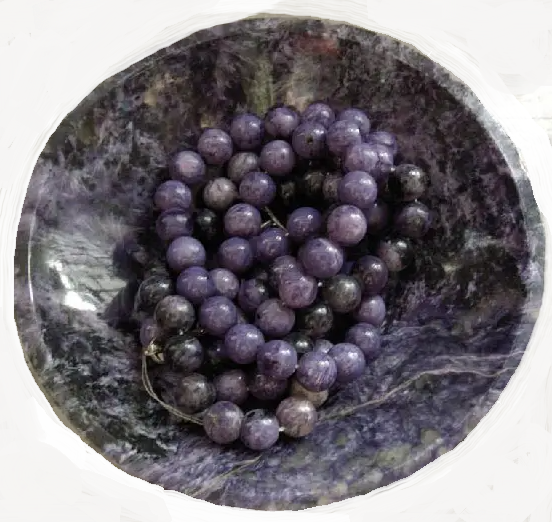
- gives lessons about life and love in both personal and professional relationships - helps to find balance in life and in relationships
- supports your life path
- convinces you that you can achieve anything
- provides energy, reduces stress and worries - transforms negative emotions into harmony and relaxation
- helps us come to terms with our negative traits and awakens self-love within us
- brings joy and sensual pleasure - induces a state of relaxation
- helps bring clarity to confusing and complicated situations
- helps its owner accept the present moment as the best possible one
- helps everyone come to terms with their “negative traits” and gain the recognition of others
- can be used to overcome various urges and obsessions
- stimulates the ability of keen observation and analysis, while also helping to use them for quick decision-making
- acts as an ally to anyone who is forced to follow the opinions of others more often than their own
- improves memory
- awakens the heart and crown chakras, cleanses the aura, and awakens unconditional love in people
- assists in changing vibrations and connects its wearer with a higher reality
- has enormous healing power on both the physical and emotional levels of the personality
- can evoke clearly distinct visions of events from past lives
- indicates ways to correct karmic destiny, both on a personal and collective level
HEALTH EFFECTS
- transforms negative energy into healing power
- supports the function of the immune system, metabolism, and heart activity
- relieves digestive and gastrointestinal problems, improves prostate function
- has a beneficial effect on the eyes, liver, and pancreas - repairs liver damage caused by alcohol
- helps get rid of cramps and pain
- regulates blood pressure
- helps children fall asleep peacefully - brings deep, sound sleep without vivid frightening dreams
- treats autism and disturbed balance of opposites
PLACEMENT
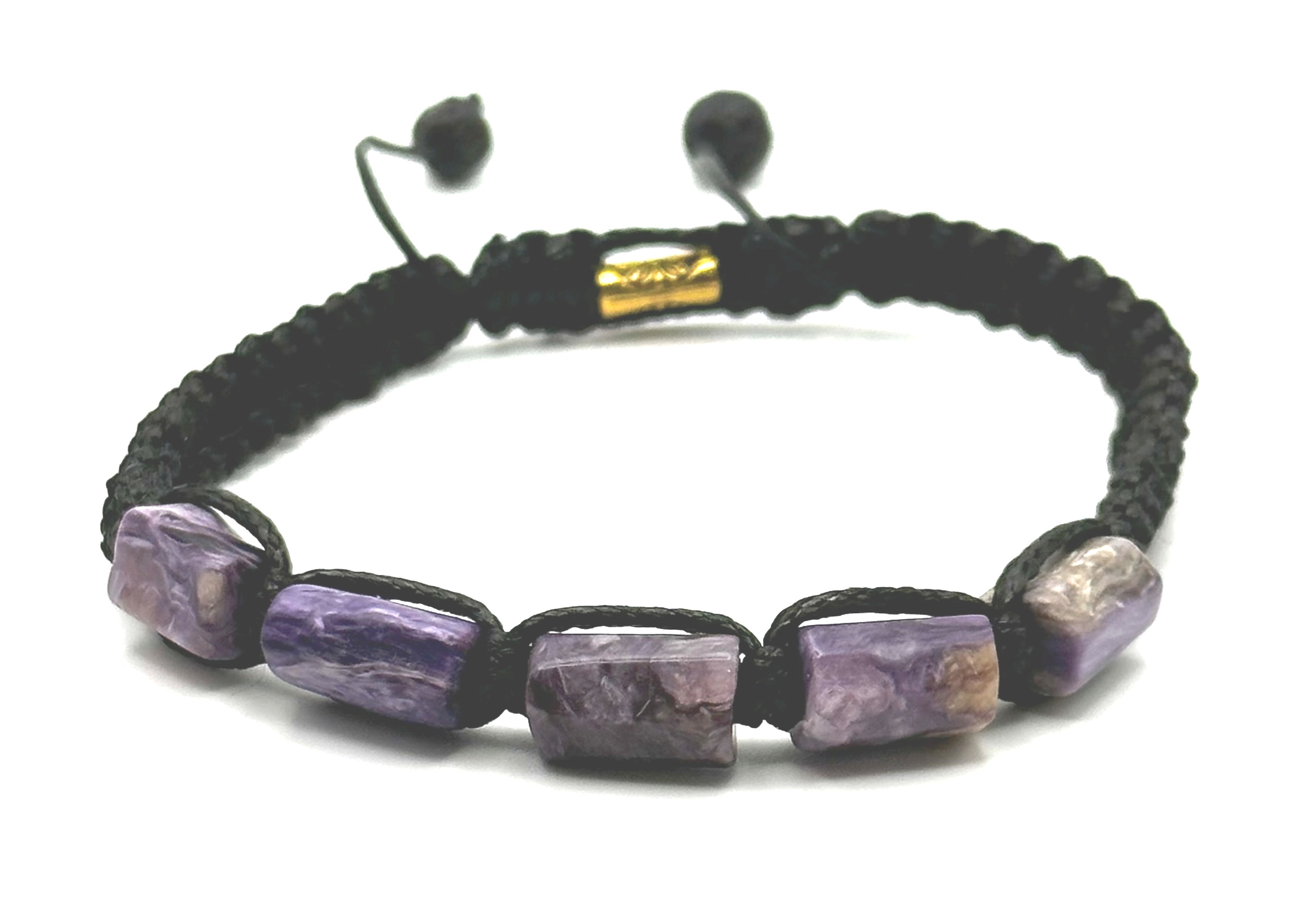
- on the heart or in another suitable place so that it is in contact with the skin
- arranging pieces of charoite is highly effective
- an elixir made from charoite acts as a highly effective cleanser of the physical body and at the same time brings confused emotions into balance
CLEANSING AND CHARGING
- clean charoite under running water until you feel it is completely free of negative energy
- charge it briefly in the morning sun, or on a crystal cluster
CHAKRA: 4.
chakra, 6th. chakra, 7th chakra
PLANET: Stone assigned to the planets Jupiter and Neptune
ELEMENT: Water, has similar properties to sugilite
SPELLS AND MAGIC
The spell of the Siberian miracle
Esotericists began studying the magical properties of the mineral immediately after its discovery. In such a short time, it has been possible to discover that charoite has strong energy and a wide range of magical abilities.
- The first and main direction in which the power of the gemstone works is harmony. This concerns many areas – a person's inner world, establishing communication with others, family relationships. Charoite gives its owner the opportunity to come to terms with their inner self, endows them with eloquence and the gift of persuasion in communicating with people, helps them find love and preserve an already established family.
- In addition to harmonizing itself and everything around it, the mineral surrounds its owner with an aura of strong protection against gossip and envy, as well as against more serious negativity - the evil eye, harm, and energy vampires. Charoite develops intuitive feelings, helps suppress outbursts of anger and aggression.
- Charoite is endowed with the ability to accumulate negative energy.
- The gemstone accompanies all determined individuals, helping them accomplish the tasks they have set despite obstacles. In addition, nuget reveals hidden abilities in a person, helps develop talents, and provides inspiration to people who are already engaged in creativity.
ZODIAC SIGNS
Despite its recent discovery, astrologers have studied this mineral and proven its connection to various zodiac constellations.
(“+++” - the stone fits perfectly, “+” - can be worn, “-” - absolutely contraindicated):
| Zodiac Sign | Compatibility |
| Aries | + + + |
| Taurus | + + + |
| Gemini | + |
| Cancer | - |
| Leo | + |
| Virgo | + |
| Libra | + + + |
| Scorpio | + |
| Sagittarius | - |
| Capricorn | + |
| Aquarius | + |
| Pisces | + |
- Libra. Charoite is an ideal talisman for this sign. The stone has a special harmony with those representatives who were born at the turn of September and October. The mineral will open all its magical abilities to them - it provides protection and harmony, develops intuition, and reveals abilities.
- Aries. Representatives of this family will find peace and emotional calm, which will help Aries in the fight against aggression and anger.
- Taurus, just like Sagittarius and Cancer, will not be able to create an energetic tandem with charoite. The mineral is contraindicated for these symptoms.
- The rest of the zodiac families, except for Sagittarius and Cancer, can safely wear the mineral.
For each zodiac sign, the nugget will unfold in its own way.
COMBINATION
Charoite is protected by two elements at once – Fire and Air. This complicates its proximity to other minerals.
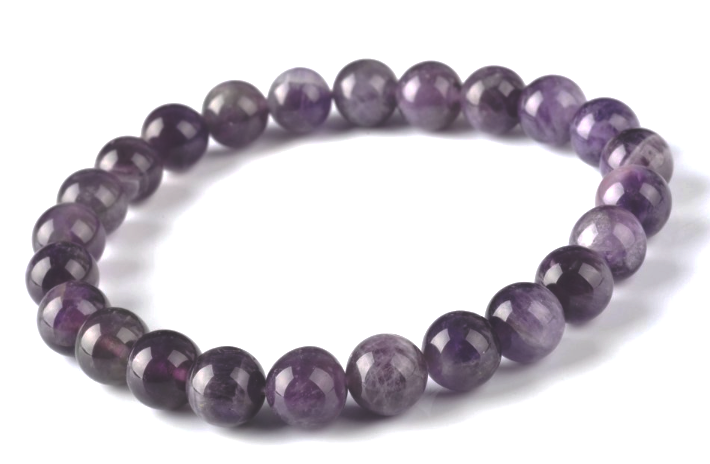
Astrologers believe that charoite is completely indifferent to any mineral, but it is better to wear jewelry with other stones on the other side (in the case of rings and bracelets) or not at all.
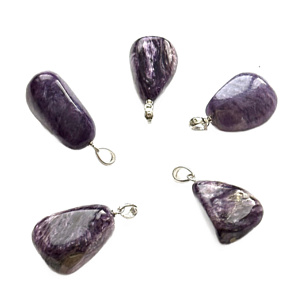
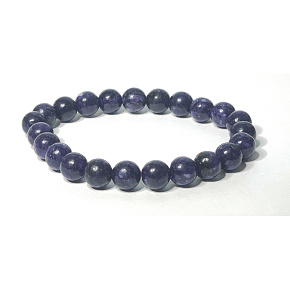
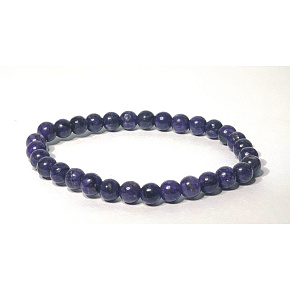
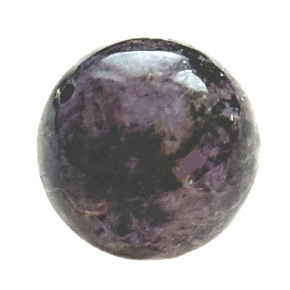
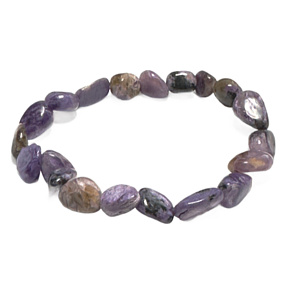
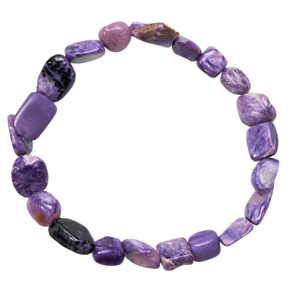
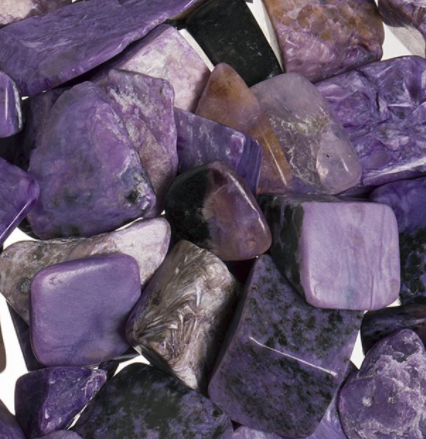
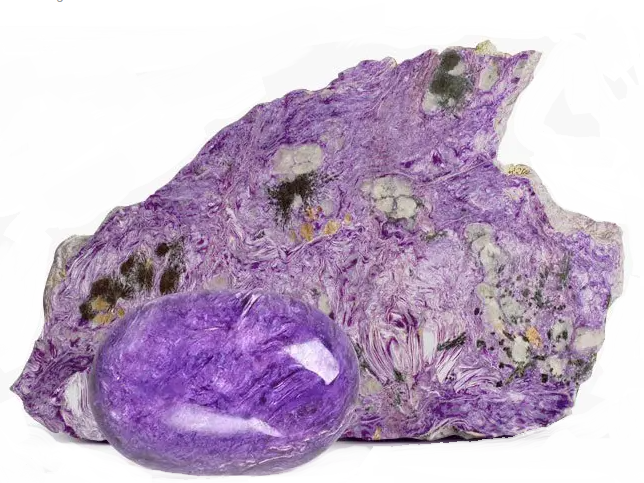
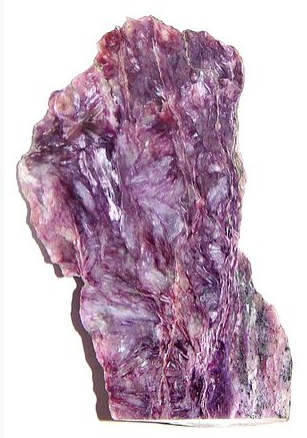
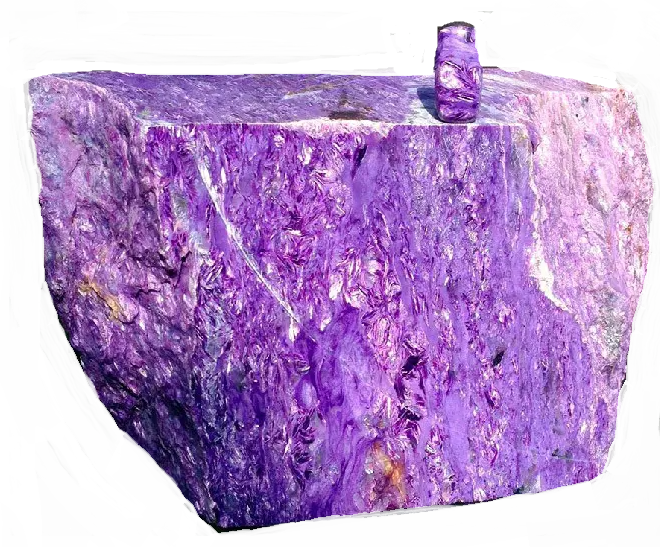
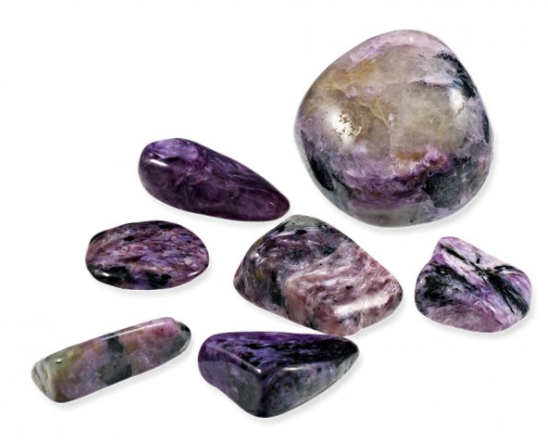
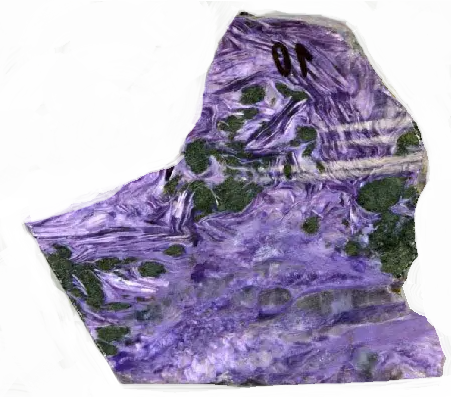
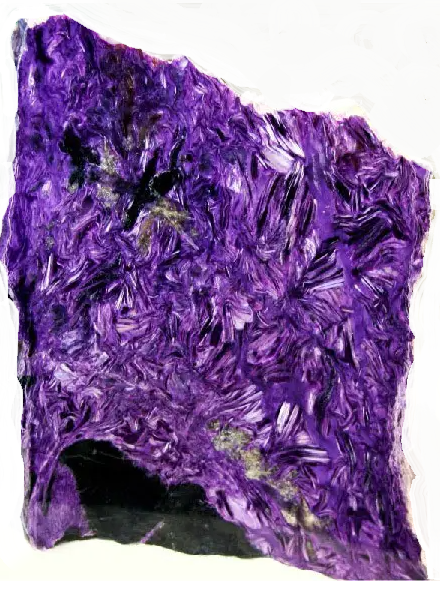
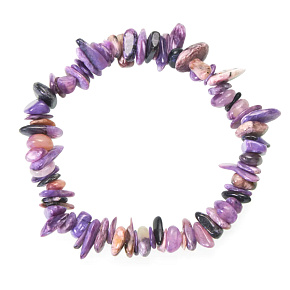
COLOR: purple, lilac, light brown, has a translucent lavender to purple color with a pearly sheen
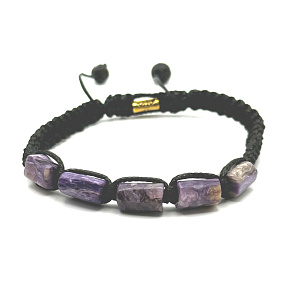
APPEARANCE: spotted or veined, often small to medium-sized pieces, sometimes smoothed or polished
LOCALITY: Russia
The uniqueness of charoite lies in the fact that the site of the stone's first discovery is the only area where deposits of this mineral are found. Scientists have so far failed to find even a trace of charoitite rock anywhere on the planet.The charoite mining site is located on the border of Yakutia and the Irkutsk Oblast. The field called “Lilac Stone” covers 10 square kilometers in the basin of the Tokko and Chara rivers. Across the entire territory, 26 separate mineral deposits are scattered and mined.The total amount of charoite reserves is estimated at approximately 140 thousand tons. Due to a lack of resources, the government of Yakutia set an annual production limit of 100 tons.
Interesting!
Craftsmen from Irkutsk are currently working on creating a unique charoite room, the only one of its kind in the world. The entire room will be clad in lilac mineral and furnished with all kinds of charoite furniture and decorations. The approximate amount of material consumed starts at 20 tons.
HISTORY AND TRADITION
Not much is known yet about this rare stone, but it is often referred to as the stone of the new age
Charoite became a random and absolutely amazing discovery of science. The lilac miracle of the far north, hidden beneath the cover of the taiga, gives a person aesthetic and emotional peace. Whether such a treasure will be discovered again is unknown. In the meantime, it is worth protecting what nature has decided to reveal to us after millions of years.
Geologists estimate the average age of the rock to be 134 million years. However, charoite, unfortunately, is not mentioned in ancient manuscripts, legends, or sagas. Not because it lacks unique qualities, no. It is simply that throughout all those centuries, this mineral was hidden from human eyes in the depths of Siberia.
In 1948, the famous scientist V.G.Ditmar geological survey of the Murun massif located in Yakutia. It was right here, during a survey of the Lena River basin for uranium deposits, that a geologist discovered purple blocks, mistakenly believed to be a type of shale.
It took 22 years from this discovery for the stone to be described as an independent mineral, rather than a subspecies of slate. Yu. G. Rogov and Yu. A. The Alekseevs are considered pioneers of the mining site. This event occurred in 1973, after which a detailed study of the field began.
The official name “charoite” was approved by mineralogists only in 1977, when geologist V. P. Rogova first discovered the mineral in the Chara River basin.This is also where its name comes from: the word “chary” means spells and magic in Russian. was unknown to most of the world until its description in 1977. It is said to be opaque and unattractive when found in the field; a fact that may have contributed to its late recognition.
INTERESTING FACT
- After discovering the mineral, he visited Yu. G. Rogov with a rock sample, mineralogy museum, Louvre. At that time, an impressive collection of planetary minerals had been assembled there, but the museum staff did not know about charoite. The scientist refused the offer to purchase a sample of the unique find.
- An interesting fact is that the first “fruits” of the masters’ work were vases, which attracted international interest. At that time, the gemstone was not yet called charoite, although it had enchanted many hearts. Today, such items are sold only at international auctions, where the price of a 30 cm tall vase reaches an average of 14 thousand US dollars.
PHYSICAL PROPERTY
Charoite owes its purple color to manganese impurities. The gemstone is part of a rock called charoitite. Studies have shown that this rock contains crystals of 40 other very rare minerals.
| Property | description |
| Formula | (K, Ba, Sr) (Ca, Na) 2 [Si4O10] (OH, F) H2O |
| Hardness | 6-7 |
| Density | 2.5 - 2.6 g / cm |
| Refractive index | 1.550-1.559 |
| Fracture | Uneven. |
| Crystal system | Monoclinic. |
| Glitter | Glass or pearlescent. |
| transparency | Transparent; otherwise, it is not transparent. |
| Color | Purple, lilac, and light brown. |
Interestingly, when the mineral is heated to 1000°C, the nugget does not lose its extraordinary color, but turns into glass beads.
Some charoites are radioactive because they contain thorium. The high content of this element makes such a stone hazardous to health.
COLOR AND VARIETIES
Mineralogy includes more than 100 types of charoite. Each of them differs in shade and pattern, which are created by admixtures of other minerals. A dozen main types are distinguished within the variety.
VEINED AND SPOTTED
The most common type of charoite. Light green and golden yellow small spots appear on the purple background of the nugget.
ROSETTE
This subspecies differs from ordinary charoite in its structural composition. In this case, the threads are replaced by rosettes of scales and leaves. The gemstone’s shades range between lilac and violet, and the surface of the stone is cast with mother-of-pearl.
SHALE
A variety of purple. The surface of such a mineral is endowed with a slight pearly luster. This type of charoite is used as an ornamental stone.
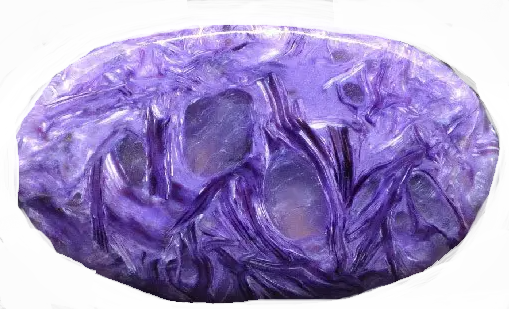
RADIANT
Stone with a low content of other minerals. The structure of the nugget is a mixture of panicular and bundled aggregates.
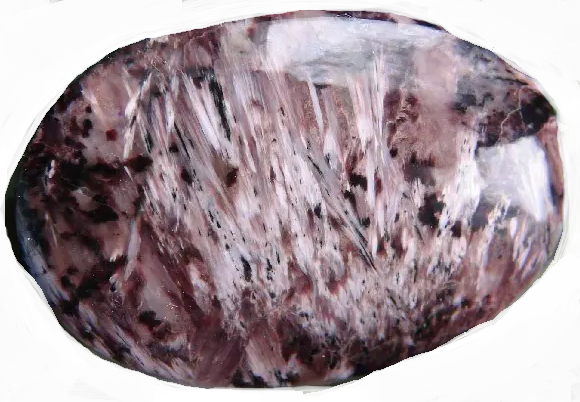
SPOTTED RADIANT
This species is the most colorful. The rich purple background creates just the right contrast for the black aegirine, golden tinaksite, and greenish-gray feldspar patches. The structure of such a stone is fibrous.
NEEDLE
This type of charoite is accompanied by aegirine, creating bizarre needle-like shapes. This gem is used by craftsmen for crafts.
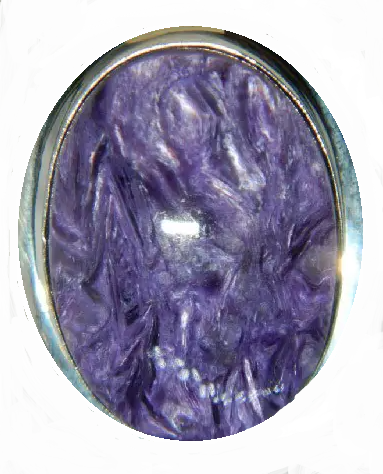
LILAC CHAROITE - ASBESTOS
A particularly interesting subspecies with a wavy fibrous structure. Jewelers especially respect this mineral, which is comparable in decorative properties to hawk's eye.
"Discharge" homogeneous
The stone is of a uniform color, lilac-gray or dark purple. A characteristic feature is the dense structural additive.
TWISTED
A speckled mineral that can be divided into 4 additional varieties. Each subspecies can be distinguished by its color and the size of its spots.
SIXTY
Lilac gemstone with a bright pearlescent sheen. The mineral structure is parallel-columnar, consisting of large aggregates.

/search_thin.svg)

/user.svg)
/cart.svg)

/heart.svg) Favorite
Favorite/compare.svg) Compare
Compare